Exceeding Great and Precious Promises…


2 Peter 1:4 “Whereby are given unto us exceeding great and precious promises: that by these ye might be partakers of the divine nature, having escaped the corruption that is in the world through lust.”

Gen. 18:25. God will do what is right. That is still a question that many people ask: “Shall not the Judge of all the earth do right?” And there is an answer to it. The rest of the Bible testifies to the fact that the Judge of all the earth always does right. Whatever God does is right, and if you don’t think He is right, the trouble is not with God, but the trouble is with you and your thinking.

Ex. 34:10. God is compassionate. The word terrible means “to incite terror.” This word does not have the same meaning as we give to terrible. It was part of the shield of God that He was putting around His people. They would have been devoured by the enemy if He had not done this.

Lev. 26:12-13. God will walk among us. God will deliver and rescue His people.  God promises to fellowship with those who obey Him. That is also what He tells us today. “… if we walk in the light, as he is in the light, we have fellowship one with another, and the blood of Jesus Christ his Son cleanseth us from all sin” (1 John 1:7). God wants to have fellowship with us. “And what agreement hath the temple of God with idols? for ye are the temple of the living God; as God hath said, I will dwell in them, and walk in them; and I will be their God, and they shall be my people” (2 Cor. 6:16).

Duet. 3: 1-3. God will fight for us. Notice how the Lord stills their fears.

Josh. 1:9. Be strong. Joshua is to take the Word of God in one hand and a sword in the other. He is to move out by faith. God encourages him again to be strong and courageous.
Like Joshua, we as believers need to be strong and courageous. We need to possess our spiritual possessions by faith. Remember we are in enemy territory.

Ruth 4:14. Our Kinsman Redeemer!

1 Sam. 16:7. God looks at the heart. When God looks at us,  He looks at us from the inside.  Samuel looks at this well–built, handsome young man and feels this must be God’s choice for the next king of Israel. But God says to Samuel, “I don’t want you to look at his outward appearance. Don’t judge a man by his looks. Let me select the man this time. I will choose the king.” God sees the heart, and thank God for that. God never judges anyone on that basis. He is telling Samuel not to pay any attention to the outward appearance. God is going to look at the heart.


2 Samuel 7:28. Sovereign Lord. Verses 26-29 David’s prayer accepted by faith God’s promises. God has also made a promise to you. It is recorded in John 3:16. It says, “For God so loved the world, that he gave his only begotten Son, that whosoever believeth in him should not perish, but have everlasting life.”


2 Kings 5:15 No other like You. The One True God!

Ezra 8:22  He said, “You know, I went before the king and told him that the hand of our God was with us, that He will be against our enemies and will lead us back to our land.” Then Ezra looked at the delegation gathered by the river ready to go on that long march. He looked at the families and the little ones, and he knew the dangers along the way. The normal thing would be to ask the king for a little help—for a few guards to ride along with them. Then the king would say, “I thought you were trusting the Lord.”

Sometimes some of us become very eloquent about how we are trusting God and how wonderful He is, but when we get right down to the nitty–gritty, we don’t really trust Him. Ezra is that kind of an individual. He surely is human. He says, “I was ashamed to go ask the king.” What was the alternative? He called a prayer meeting and a fast. He said, “Oh, Lord, we just have to depend on You.” You know, the Lord puts many of us in that position many, many times.


Esther 4:14 For such a time as this. God knows what is coming. That is why we can trust Him. When we put our hand in His hand, He has the power to hold us. He knows what is going to happen tomorrow and next month and next year. He will care for us. All we have to do is trust Him.

Job 42:2 All things. No plan of God’s can be stopped. This the kind of God we have. He can do anything!

Ps. 34:22. He will redeem.

Prov. 18:10 He is a strong tower. The name of Jehovah is also the name of the Lord Jesus Christ. He is called Jesus because He saves His people from their sins. And He is called Christ because He is the Anointed One. He is the Lord of our life and our salvation. The Lord is a strong tower. You can run into it and be completely safe. This is a verse that many have used in speaking to children, and I have used it myself and found it very effective. It speaks of security and reminds us that no one can pluck us out of His hands. What a beautiful picture this is!

Ecc. 12:13. Fear God and keep His Commandments.  “Fear God.” This is the message of the Book of Proverbs as well as the message here. In view of the experiment made “under the sun,” the wise thing is to fear God, which means to reverence, worship, and obey Him.

“And keep his commandments” would mean to meet God’s conditions for salvation—in any age—grounded on faith in God. For Cain it meant bringing a lamb. For Abraham it meant believing the promises of God. For the people of Israel it meant approaching God through sacrifice in the tabernacle and in the temple. For us it is to “… Believe on the Lord Jesus Christ, and thou shalt be saved …” (Acts 16:31).


Song of Solomon 2:4. He loves us! In this there is a beautiful picture of the church which will be the bride of Christ. It also reveals the personal relationship which is possible between the Lord Jesus Christ and each individual believer.

Isa. 1:18. God is our hope and our salvation. Philosophy says: Think your way out.

Indulgence says: Drink your way out.

Politics says: Spend your way out.

Science says: Invent your way out.

Industry says: Work your way out.

Communism says: Strike your way out.

Fascism says: Bluff your way out.

Militarism says: Fight your way out.

The Bible says: Pray your way out, but

Jesus Christ says: “I am the way (out) …”


Jer. 33:3. Call on His name.

Lam. 3:22-26. The Lord is Good.

Ezk. 36: A new heart. God says what He is going to do. A change is going to take place. “A new heart also will I give you”—they are going to be born again.

Dan. 4:17. God’s sovereignty.

Joel 2:25. God restores.

Amos 4:13. God forms.   He is the omnipotent Creator. He has all power. It was He who formed the mountains and created the wind.

Obadiah vs. 15. The day of the Lord.

Jonah 2:2. Call unto Him and He will answer.

Micah 6:8 His way is easy.

Nahum 1:7. God is compassionate.

Zep. 3:17 God will quiet me.

Haggai 2:7. God will shake the earth, the nations.

Zech. 14:9 He is the final answer.

Mal. 1:11. His name shall be great.

Matt. 11:28. Come to Me.

Mark 10:27. With God, All things…  Money will buy a bed, but it will not buy sleep.

                                     Money will buy food, but it will not buy an appetite.

                                     Money will buy medicine, but it will not buy health.

                                     Money will buy a house, but it will not buy a home.

                                     Money will buy a diamond, but it will not buy love.

                                     Money will buy a church pew, but it will not buy salvation.


Luke 10:20. God has written our names in heaven.

John 3:16. God’s grace.

Acts 17:27. God is not far.

Romans 8:18. Complete, like Him…

1 Cor. 1:18. Just proclaim the Gospel!

2 Cor. 5:17. A new creation… You are a new creation because Jesus says so. The basis is the Word of God. You no longer belong to the old creation that fell in Adam.

Gal. 1:4. Christ came to rescue us. He can deliver us. He wants to deliver us. He will deliver us, and He will do it according to the will of God.

Eph 1:4 He chose me before the foundation of the world.

Phil. 1:6. Faithful to complete you. This is a great verse to claim as your life vrese.

Col. 3:12. We are God’s elect.

2 Tim. 1:1 The promise of eternal life.

Titus 3:4-5. God’s mercy.

Philemon 6. God works through us, it is God which worketh in you both to will and to do of his good pleasure” (Phil. 2:13)

Heb. 7:25. He can save all. Christ lives to intercede for us, me.

James 1:17. He promises us gifts. We have no idea how good He is to us.
1 Peter 5:7. God cares for me, you.

2 Peter 1:3. He has given us all things…

1 John 1:9. Confess!  What does it mean to confess our sins? The word confess is from the Greek verb homologeo, meaning “to say the same thing.” Logeo means “to say” and homo means “the same.” You are to say the same thing that God says. When God in His Word says that the thing you did is sin, you are to get over on God’s side and look at it. And you are to say, “You are right, Lord, I say the same thing that You say. It is sin.” That is what it means to confess your sins.

2 John 2. The Truth. He gives us the Truth.

3 John 5. He gives faith, to do faithfully.

Jude 24. He is able.

Revelation 21:4. The promises are ours, mine, not because we or I are good, but because He is good, He is righteous. He is always with me-God is with me!

Sources: Pastor Michael, FBC . Mustang Oklahoma, DR. J. Vernon McGee, among others…2012 09 12_0459

Leaven….


The evil spreads like leaven; you tremble . . . but be of good cheer, disciples of Jesus, greater is He that is for you than all that are against you; the word of life which has been hidden in the world, hidden in believing hearts, is a leaven too. The unction of the Holy One is more subtle and penetrating and subduing than sin and Satan. Where sin abounded, grace shall much more abound. William Arnot.2012 09 05_0412_edited-1

A Simple Faith….


Norm with Leo on our to fellowship at FSBC Mustang Oklahoma.Acts 10:44. “While Peter yet spake these words, the Holy Ghost fell on all them which heard the word.” If you are like me, a Gentile, or in other words, not of the Jewish race, this is an exciting passage for us. Before this time the Gospel had been offered only to Jews, and the Holy Spirit falling on them through the apostles. That was then and this is now, the way it will be, the way of this age of Grace. With simple faith in Jesus Christ, the Holy Spirit is given without delay! Not what religious organization that you belong to, but what is your relationship with Jesus Christ? 

Something to Ponder…..


The book that I read all of this in says, to ponder the fact that God has a life of blessings for you, and remember that being comes before doing for what we do is always determined by who we are. In the believers case, whose are you.

Matthew 5:6-10
:6 Blessed are those who hunger and thirst for righteousness, for they shall be filled.

It is not those who are hungering and thirsting for happiness who are being satisfied. It is those who strive for the righteousness of Christ in their own lives.


:7 Blessed are the merciful, for they shall obtain mercy.

Someone who has been shown mercy and is hungering for righteousness, is someone who is showing mercy.

:8 Blessed are the pure of heart, for they shall see God.

It becomes as natural as water running down hill for the one who is pursuing God to have a pure heart in motives and morals.

:9 Blessed are the peacemakers, for they shall be called sons of God.

God says peacemakers, not peace lovers. Someone who tries to sow seeds of discord, is someone who is not thirsting for the things of God. Someone who is after God’s heart, is someone living in love and unity with those around them.

:10 Blessed are those who are persecuted for righteousness.

Someone who is never confronted by spiritual obstacles, is someone not hungry for the things of God. If we are not meeting the devil head on from time to time, we are most likely going the same way he is head.

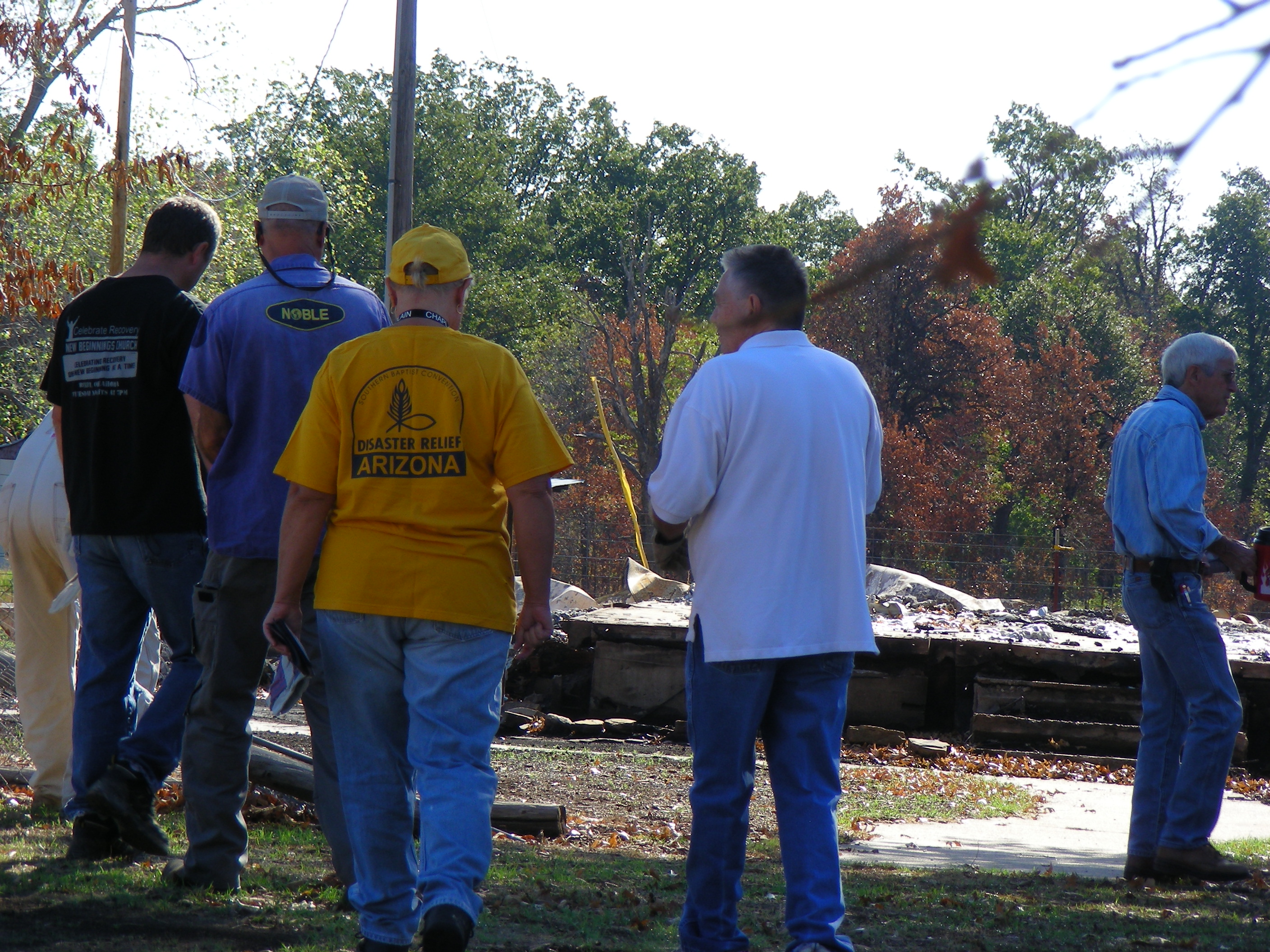
Mannford Oklahoma Disaster Relief…the Lost Sheep team…


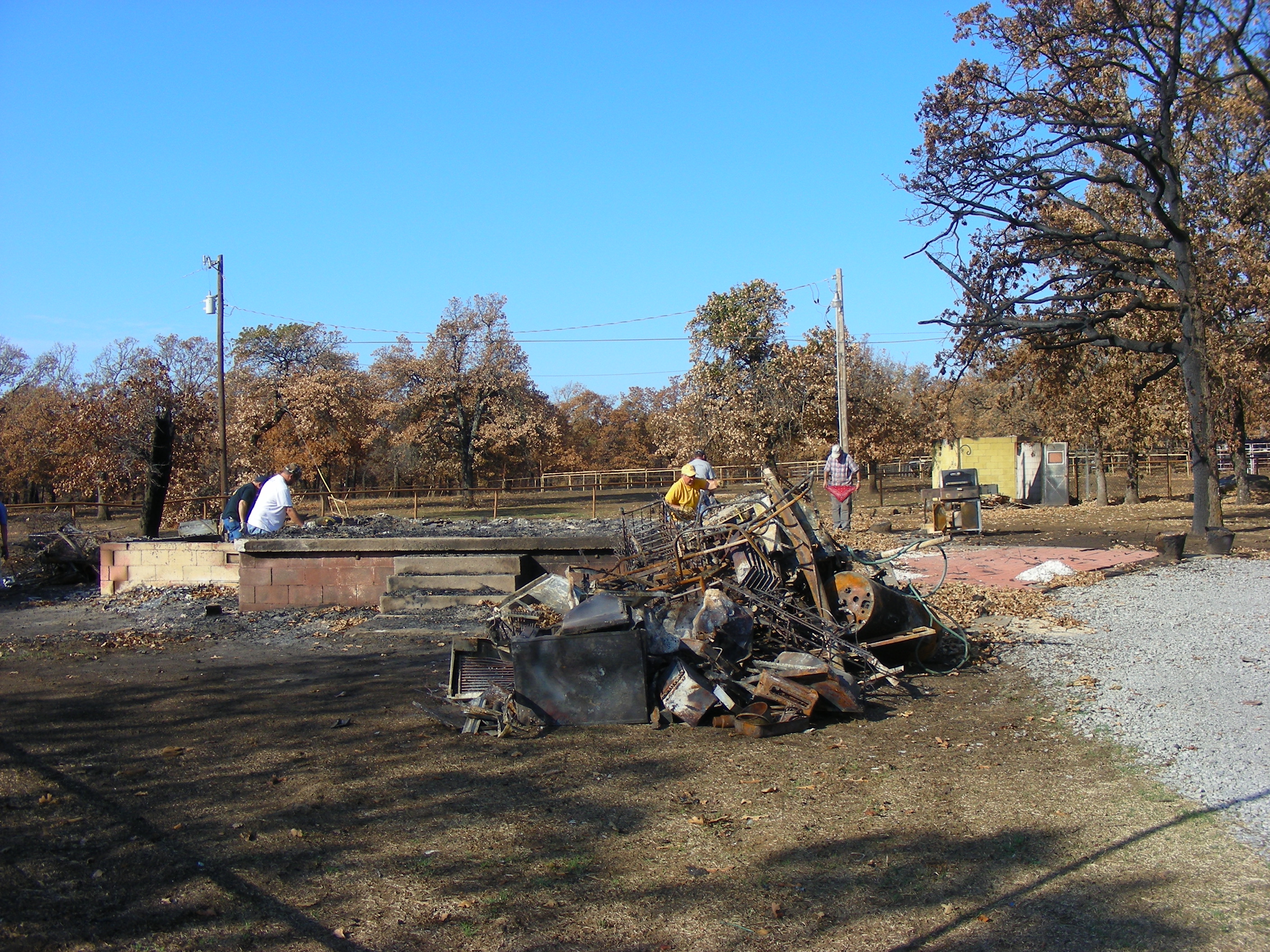
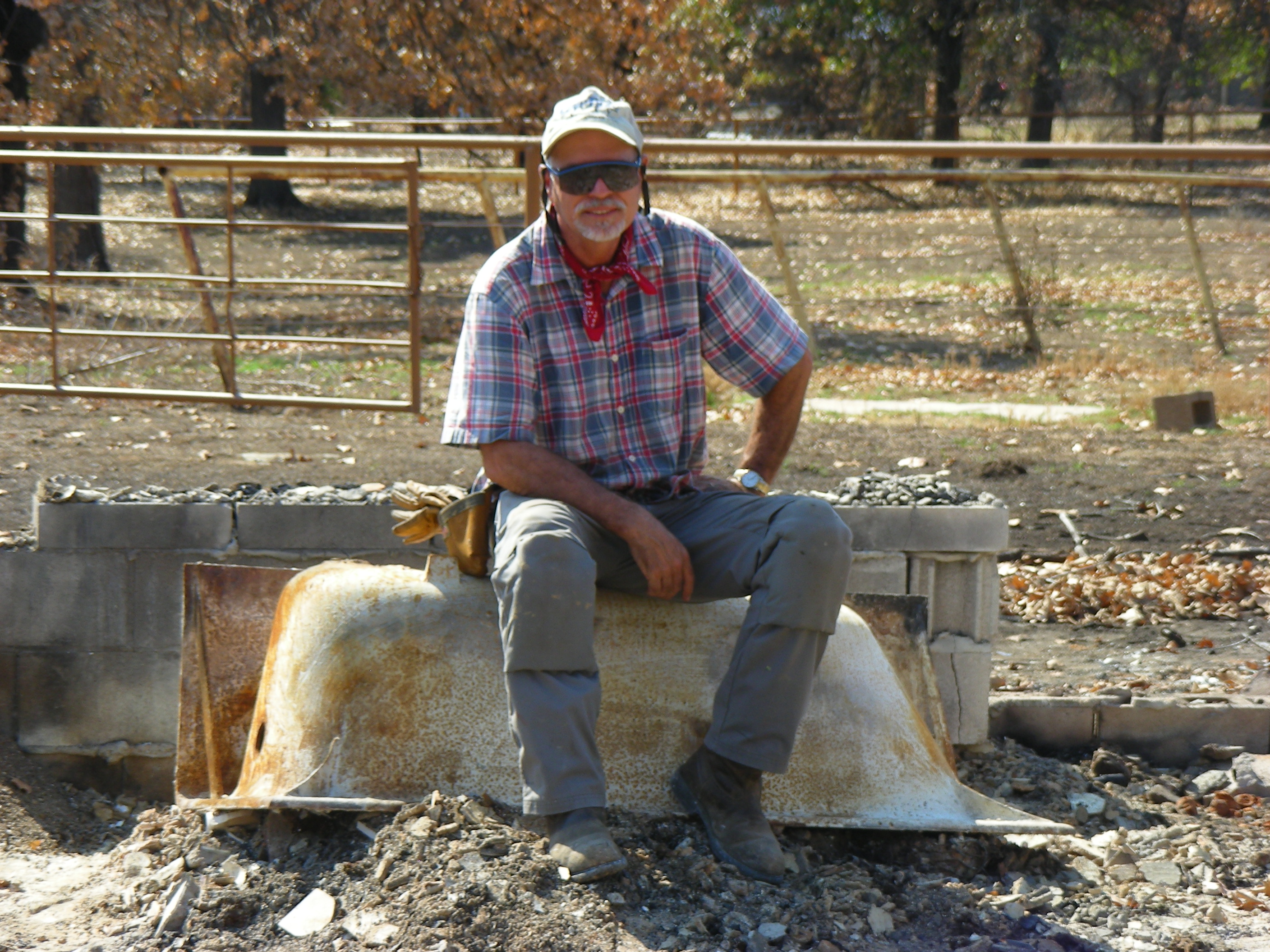
We took a lot of pictures and got to volunteer with some great people who love the Lord. Most of the guys and gals we  worked with were DR trained, but our team, known as the ‘Lost Sheep’  was made up of local members of FBC Mannford, and a couple of fella’s from another SBC church. The Incident Command team tracks the teams that are on the job by name, (for example ‘Team Arizona’ if we would have had an entire team) and since we were made up of just a few DR people and the majority of volunteers, they named us the Lost Sheep. 

Good Times at the Enduro-Cross race….


Truthfully, I thought this would be a lame night of racing and I am not a huge fan of this type of event. I am glad that I was all wrong, because the three of us had a blast. When the motors were not revving, we could hear the cows and horses that were just outside next to the arena. Paul was busy all night racing up and down throwing his yellow flag around like a third world police officer working a busy traffic intersection. Leo probably spent 80% of his evening playing in the dirt, he could not get enough of the pooh riddled terrain. His socks went from white to brown, and at least once I had to help him pour dirt out of his sneakers. I spent most of the night keeping him safe from flying bikes and quads. We were so close to the track that I felt nervous, constantly monitoring his position. Like I wrote, good times. 

Nic’s in Oklahoma City


Our entire family enjoys Nic’s when we are here in Oklahoma City. Thanks to our daughter and Norm’s birthday, we visited for breakfast, our first time for this meal. Nic’s is open only for breakfast and lunch and has about 15 seats in all. Often there is a waiting line to eat, and they also do takeout. The regular meal for us is the burgers, ground beef the size of a softball is grilled slowly and topped with just about anything you would want. An equal or larger amount of fries comes with the burger. The plate of food looks very intimidating. Nic’s has just one server and he remembers what each person is drinking and always keeps the glasses full. Any meal at Nic’s is usally a one meal day.

On the Road, Again…


We packed up and headed east to Oklahoma City. Towing our little back country 14 foot cargo trailer on Interstate 40 I began to notice that the trailer appeared to be trying to turn left as we were driving straight down the road. After hauling some local cargo and backing and getting our son, Paul to spot me backing into a spot, he says to me, “Hey Man, your trailer looks like it is turning all the time your backing up.” After securing the unit, we crawled under and discovered a broken leaf spring! With Paul’s help, we jacked up the broken side and removed the broken spring. After some calls and internet searches, I found a leaf spring store in down town OKC. We brought the broken one with us and the leaf spring guy told us it looked as if the spring had been cracked for some time and had just finally broke. Armed with the exact replacement, we made short work of installation and even adjusted the brakes. The following day, Leo, our grandson having watched us remove and install the leaf spring declared that he needed to work on the trailer, “Come on Guys.” he said. So we first went to the garage and after gathering all of the equipment he said he needed, we soon realized he had more than we could carry so Leo, being ever so resourceful, recruited his farm tractor and wagon to perform the heavy lifting.

Book of Esther, chapter 8 vs. 7 – chapter 10 vs.3


Chapter 8 vs 7 Okay, great, the king has given to Esther and Mordecai the house of Haman, but the decree is still in effect to kill all Jews. Just because Haman is dead, that doesn’t make it better.

vs 8-9 The scribes must have carpal tunnel by now. Mordecai acts quickly to have a new law written in every language in the kingdom. This is approx. 2 months after the first decrees writing and 9 months before executing of it.

vs 10-12 For two months the Jews had been under the death penalty, with no pardon seen, and now they had to believe the king was on their side and had issued the decree to save them. Sound familiar? We also must believe the King of kings is on our side!

vs 13-14 They were to go ASAP. A lost person needs to make haste to Christ. That is the only thing He wants us to do in a hurry, come to Him for salvation. They knew the time, but we don’t. Our time could be short! Christ could come for His bride any day.

vs 15 From sackcloth and ashes to royal apparel! Notice the difference between the two decrees, Haman’s brought sadness and the king’s brings gladness. Like sinners, sad to joy.

vs 16 God is light. Jesus is the Light of the world. He is also gladness, and joy, and honour. He lifts us up out of the muck of this world. We should be doing three things today, 1. rejoice always, 2. pray without ceasing, 3. in all things give thanks. If we have Christ, we must have joy and be joyful.

vs 17 Read Zech. 8:23.  

Chapter 9 vs 1-2 Thanks to the king’s new decree, the Jews ready themselves for attack, to defend. Some ancient writings say that only the Amalekites took up arms against the Jews. Their hearts being hardened like Pharaoh’s.

Vs 3-4 Notice that the throne that once condemned the Jews, now protects them. Did the people take up arms to help the Jews because they liked them? No, they took up arms because they feared Mordecai. Not only was he high up in the kingdom, but word had spread about his wisdom and virtue. Today, the Throne of God protects us, believers. Rom. 8: 33-34. No one can condemn a believer today. Follow this with Heb. 4: 14-16.

Vs 5-10 We see the names of the ten sons of Haman were killed. Why do you think that their names are listed here, recorded for history to see? Did you notice, “but on the spoil laid they not their hand?” They could have taken the spoil, but they just defended themselves and went no further. They also could have killed women and children, but there is no recording of any of that happening.

Vs 11-12 The king seems dumbfounded that the Jews killed that many people in Shushan alone and ponders how many were killed in the other 127 provinces. It is interesting that the king continues to trust Esther in these matters. He has seen her character in the last hours and greatly admires her. Prov. 31:11, “the heart of her husband trusts in her.”

Vs 13-14 The queen asks for one more day and the opportunity to display the bodies of Haman’s son, to warn others to never try to repeat what Haman tried.

Vs 15 With self-control, the Jews again defend themselves and take no plunder.

Vs 16 The king gets his answer from all the provinces that were killed, 75,000.

Vs 17-19 The very day the Jews were to be wiped out, they find rest and have a feast, the feast of Purim, still celebrated by Jews to this day.

Vs 20 Probably Mordecai wrote the book of Esther.

Vs 21-27 Today the Feast of Purim is celebrated by orthodox Jews in their synagogues. Gladness and the reading of the book of Esther is all part of the celebration. While reading the book, when they come to the name of Haman, after reading it they spit. The next day they have the food feast. A two-day feast which is really explained well in verse 22.

Vs 28-32 Esther  gives her people a lasting reminder that God is faithful as He keeps His promises and preserves His people. You just have to say, “Well done, Queen Esther!”

Chapter 10 vs 1-3 The Jews pray three prayers at the Feast of Purim, 1. They thank Jehovah that they are counted worthy. 2. They thank Him for preserving their ancestors. 3. They thank Him that they lived to enjoy another festival. As Christians, we should a spiritual meaning in the Passover Feast. 1 Cor. 5:7…Christ our passover is sacrificed for us.” He is the salvation of God for us. The keeping power of God is shown in the Feast of Purim. His providence, His sovereignty, “The lot is cast into the lap; but the whole disposing thereof is of the Lord, Prov. 16:33. God overruled Judas Iscariot, Hitler, Stalin and He will overrule me, you, us. If we slip out from under God’s direct dealings, we have not slipped out from His providential dealings.

“He knows and loves and cares,
Nothing this truth can dim:
He gives the very best to those
Who leave the choice to Him.”

Study of Esther, chapter 7 verse 7 through Chapter 8 verse 6


Chap 7 vs 7 The king needs to cool off and Haman now becomes like a slave before the queen to beg for his life and deliverance from the wrath of the king.

vs 8 The king returns and sees Haman in a position that appears to be doing harm to the queen. The king speaks what he sees and the palace guards leap into action to restrain Haman.

vs 9-10 Galatians 6:7 “Be not deceived; God is not mocked: for whatsoever a man soweth, that shall he also reap.” The king was judge jury and executioner! He wasted no time on disposing of Haman. Read Psalm 37: 35-36, Dan. 6:24. We should be sensitive to God’s interventions every day. Here are 3 ways we can do that, 1. “The fog on your lake is neither accidental nor fatal.” Sometimes we will be trying all sorts of different swimming techniques to stay a float, but in all those times we need to be listening for His voice. Listening with great sensitivity. 2 Cor 5:7, get into His Word, get on our knees, take wise counsel from those that are grounded in the Faith. Then wait, and then,wait some more. Don’t try to read the stars or palms and don’t listen to those that say they can. 2. “The workings of God are not related to our clocks; they are related to our crises.” God does not care what time it is here, so while waiting, we should look beyond the present. What would be the best way to do that? Pray! Be a man or woman of prayer. Tell Him of the urgency, the horror of waiting, your panic, ask Him to hurry, He can handle it. 3. “The surprises in store are not merely ironic or coincidental, they are sovereignly designed.” Don’t doubt or deny that He is at work. What looks like the very end, is really the very beginning. Look at the Cross, Rome, the Jewish officials,  rejoiced! Then three days later, it wasn’t the end,it was the beginning! Esther makes a great model to follow, but the focus needs to on God. How perfect His work, His providence, His control and interest in our lives.

Chap 8 vs 1-2 Esther at last reveals her relationship to Mordecai. Here goes the king again, giving out that powerful ring, it seems, on a whim. This time, the ring will be in good hands.

vs 3 Esther cries for help from the king, but nothing really can be done to change the decree. Esther cries, she wept. The genuine, compassionate tears of a woman are absolutely irresistible. Rare is the man that is near those tears and is not softened by them. A woman’s tears can melt the hardest heart! Another fix to a heart problem, the Lord. Proverbs 21:1-2. No heart is so stubborn that God cannot penetrate it. No will is so determined that God cannot break through. No one, powerful or not, is a match for the living God.

vs 4-6 Esther makes it clear to the king that judgement against Haman is no good unless something is done to keep Haman from exacting revenge from the grave. Something must be done to save her people!

Book of Esther Bible study, chapter 5 vs 7 through chapter 7 vs 6…


Chapter 5 vs 7-8 Esther does not have the courage to express her request to the king. It seems like she is stalling for time. This adjourning of the main petition may be attributed, (1.) To Esther’s prudence; thus she hoped yet further to win upon him and ingratiate herself with him. Perhaps her heart failed her now when she was going to make her request, and she desired to take some further time for prayer, that God would give her a mouth and wisdom. The putting of it off thus, it is likely, she knew would be well taken as an expression of the great reverence she had for the king, and her unwillingness to be too pressing upon him. What is hastily asked is often as hastily denied; but what is asked with a pause deserves to be considered. (2.) To God’s providence putting it into Esther’s heart to delay her petition a day longer, she knew not why, but God did, that what was to happen in the night intervening between this and tomorrow might further her design and make way for her success, that Haman might arrive at the highest pitch of malice against Mordecai and might begin to fall before him. The Jews perhaps blamed Ester for procrastinating, and some of them began to suspect her sincerity, or at least her zeal; but the event disproved their jealousy, and all was for the best.

vs 9 “Pride goes before destruction, and an haughty spirit before a fall.” (Prov. 16:18). Haman strolls down the street, all puffed up from his one on one visit with the king and queen. The kingdom bowing left and right, and then he comes to the gate and there is Mordecai.

vs 10-11 Haman comes home and calls his friends so he can do some bragging.

vs 12 Along with bragging about his money and position, Haman brags about being favored by the queen. Lunch today and dinner tomorrow.

vs 13 Someone once said that you can tell the size of the man by the things that irritate him. If little things irritate him, he is a little man. If it takes big things to irritate him, he is a big man.  Haman proves he is a little man.

vs 14 At the suggestion of his wife and friends, Haman has a gallows built that is 75 feet tall! Mordecai’s name means ‘short.’ This shows the hatred and bitterness of heart that Haman had for Mordecai.

Chapter 6 vs 1 No sleep for the king seems like a small thing, but God uses small things. Wonder why the king did request music(Dan. 6:18)? Hearing this book read will cause him to think on the events that had taken place. Count the little things that add up as we read on in this chapter.

vs 2-3 Could have been forgetfulness, envy by others of the king’s court, or the fact that he was a Jew.

vs 4-6 Who has never had this happen to them? It happens a lot when one person is thinking of a certain person and the other person is thinking he is talking about an entirely different person. Man – He names none, because he would have the more impartial answer. And probably knew nothing of the difference between Haman and Mordecai. Thought – As he had great reason to do, because of the favour which the king had showed to him above all others.

vs 7-9 What does Haman’s answer reveal? What is his true objective? Haman has the throne in mind, he wants to be king and at the right time, he would make his move.

vs 10 There is probably no worse thing that Haman could hear then this.

vs 11 How humiliating would this be for Haman?

vs 12-14 Mordecai returned to his duty, no big deal, but Haman ‘hasted’, as if he were a leper to sulk. His head covered in shame. Haman’s wife and friends tell him he is in a bad way and now the king and queen have sent for him to attend the banquet. Things are out of control for Haman, but in the control of God.

Chapter 7 vs 1-2 Haman is in a state of confusion, not knowing why Mordecai had been rewarded and he had not. Esther, in the meantime, has ramped up and found her courage. The king, for a third time, offers up half of his kingdom for Esther.

vs 3-4 This was a shock to Haman and the king. No one knew that the queen was a Jew. No longer afraid, Esther takes her place next to her people. Esther’s words here are beautiful.

vs 5 The king’s answer makes one wonder if he even knows what is going on. He gives Haman the power to wipe out an entire race and doesn’t even remember it.

vs 6 Haman has nothing to say. He is probably still in shock.

Book of Esther, chapter 3 vs 10-chapter 5 vs 6…


Chapter 3 vs 10 Xerxes carelessly passes great power, the power of life and death to this evil minded man, Haman. The king lost, by some estimates, two million men to his campaign against the Greeks, so what would be the big deal with eliminating another group of people.

Vs 11-13 This was a large government project, to get this word of killing out to all of the provinces. A minimum of 127 different languages. This is a huge land mass that needs to get the word that on a certain day, to kill all Jews in their land. This would be the law in the land of the Medes and the Persians.

Vs 14-15 The city is astonished! They did not understand the king’s decree. Yes, the Jews were outsiders and a bit strange in their customs, but they did not deserve to die. All of the city could see hundreds of riders with the decree in hand to ride in all directions, on their way to deliver the death sentence. The riders are to ‘hasten’ at the king’s request. The city is in state of shock and the king takes Haman to happy hour. The king did not know how this order would impact his new queen. Anti-semitism had its birth in Egypt under Pharaoh, where the Jews became a nation. Through history, Assyria, captivity of Babylon, our study of Esther concerning Persia, Rome, the Spanish Inquisition, and Hitler under Germany where it is estimated six million Jews died. On a bulletin board years ago, an unbeliever wrote this, “It is odd that God should choose the Jew.” A Jew came along and wrote this, “God chose, which shows God knew His Jew.” A Christian came along and wrote beneath that: “This Jew spoke true. God knew His Jew as King would bring to earth new birth.” God chose the jewish race for that purpose and for that purpose they are hated. Hated by Satan, and as a result hated by nations of this world. Read one of God’s promises for His people, the Jews, Jer. 31:35-36. Think on that for a moment! God stands in the shadows, keeping watch over His own.

Chapter 4 vs 1-2 Cry – To express his deep sense of the doom coming upon his people. It was bravely done, publicly to espouse a just cause though it seemed to be a desperate , one. Mordecai knows this decree cannot be changed. He also knows that he is probably to blame for this. It has been estimated that there were around fifteen million Jews in the kingdom at this time.

Vs 3 What is missing here? A call to prayer! They go through the rituals of fasting, sackcloth and ashes, and great mourning.

Vs 4 Questions come to mind as we read Queen Esther’s response. Yes, she was greatly grieved, but what else does she do? She sends a fresh suit of clothes to Mordecai. Is Esther embarrassed and wants to not lose face? Did she want Mordecai to get cleaned up and return to his job at the gate? What was Mordecai’s reaction to his new set of clothing?

Vs 5 After sending Mordecai new duds, Esther wants some answers concerning the sackcloth and ashes.

Vs 6 Esther could not go herself and so she sends this man, Hatach.

Vs 7-9 Mordecai told him all that had happened unto him, what a price Haman had against him for not bowing to him, and by what means he had procured this edict; he sent her also a true copy of the edict, that she might see what imminent danger she and her people were in, and charged her, if she had any respect for him or any kindness for the Jewish nation, that she should appear now on their behalf, rectify the misinformations with which the king was imposed upon, and set the matter in a true light, not doubting that he would vacate the decree.

Vs 10-12  (10)Esther listens, reads the decree and then sends a response to Mordecai. (11)  Inner court – Within which, the king’s residence and throne was. Not called – This was decreed, to maintain both the majesty, and the safety of the king’s person; and by the contrivance of the greater officers of state, that few or none might have access to the king but themselves and their friends. Esther says, “I have not been called, which gives me just cause to fear that the king’s affections are alienated from me, and that neither my person nor petition will be acceptable to him.” (12) Then Mordecai sends these famous, and memorable words.

Vs 13-14 It might be that Esther is remembering the queen she had just replaced? Although the king was not aware of Esther’s heritage, she will not be exempt from the decree. What does Mordecai mean when he says ‘deliverance will arise from another source?’ Did he have God in mind as the other source? Did Mordecai know at this time why Esther was in the position that she was? Did he have the faith that if Esther did not respond that God would step in and save His people? Does the statement at the end of 14 tell us that Mordecai could now see the providence of God at work to save them? Here are the words of John Wesley, “ It is probable God hath raised thee to this honour for this very season. We should every one of us consider, for what end God has put us in the place where we are? And when an opportunity offers of serving God and our generation, we must take care not to let it slip.” Let’s read some of God’s Words on the subject, Prov. 3:25-26, Isa. 46:4.

Vs 15-17 These are great words from a great women. Esther reminds us of a ‘first responder.’ Straight away she gives instructions and prepares to face death and accept the outcome, live or die. Looking carefully at the text, we find no mention of prayer or of God. Remember these are the Jews that did not return to the land as God had instructed. It is hard to pray when you are not in God’s will. It is possible that some prayed, but it is not mentioned.

Chapter 5 vs 1 When the time appointed for their fast was finished she lost no time, but on the third day, when the impression of her devotions were fresh upon her spirit, she addressed the king. When the heart is enlarged in communion with God it will be emboldened in doing and suffering for Him. Some think that the three days’ fast was only one whole day and two whole nights, in all which time they did not take any food at all, and that this is called three day.  Some believe this is the same amount of time Christ laid in the grave before His resurrection. Now she put on her royal apparel, that she might better recommend herself to the king, and laid aside her fast-day clothes. She put on her fine clothes, not to please herself, but her husband, the king.

Vs 2 Esther, prepared, stepped into the unknown when she entered into the royal court and waited. Would the king grant her an audience or not? Here is some knowledge, Proverbs 21:1, “The king’s heart is in the hand of the Lord, as the rivers of the water: He turns it wherever He wills.”

Vs 3 The king knows something is troubling his queen, he can see she is stressed and wants to soothe her. “Half of the kingdom,” really means that she could have whatever she wanted.

Vs 4 This is a bold and brave plan that Esther has put into motion. She invites the king and Haman to a banquet at which time she will reveal to the king that along with all of the Jews deaths, Haman wants her death also.

Vs 5  This verse shows the affection that the king has for Esther. He has been generous with Haman, making him prime minister, giving him his ring, and granting his request to wipe out the Jews. When the queen makes a request that involves Haman, the king intends to make Haman obey the queen.

Vs 6 It is obvious to the king that Esther is still nervous and upset, so he again offers her a blank check. Did you know that God has given us a blank check? Read Phil 4:19.

Book of Esther, chapter 3: 1-9…


Chapter 3 This chapter has been repeated many times in the history of the Jewish people. In place of the name of Haman you put Pharaoh, Nasser, Hitler or just any middle eastern country. Ever since the nation of Israel was born till now, there has been some movement to exterminate them.

Vs 1 Haman’s position would have been that of prime minister. Haman was an Agagite. Does that ring a bell? Let’s read 1 Sam. 15:8. Disobedience! If Saul had done what God had said there would not have been a Haman. God could see what was coming from Saul not listening, it almost cost the nation of Israel its life. God is in the control  tower and in charge. No weapon will prevail against God’s people.

Vs 2 Mordecai may have been out of the will of God by not returning to the land, but he followed God’s law by not bowing to anyone other than God Himself.

Vs 3-4 Mordecai had instructed Esther not to reveal her race and up to this point, no one knew he was a Jew. With the promotion of Haman, Mordecai is forced to reveal his origin. By doing so he also reveals his religion. Mordecai worships the one true and living God, he will bow to no idol, image or man. He knows Deut. 6:4, “Hear, O Israel: The Lord our God is one Lord.” Mordecai would have been told to declare this to the ancient world of idolatry. Today in our world of atheism, we proclaim the Trinity, Father, Son and Holy Spirit. Mordecai takes a stand and everyone now knows why.

Vs 5-6 We see these two men in contrast. One stands for God and the other stands for Satan. Just like everyone today that belittles the Bible, they lack an understanding and the Holy Spirit to know the Bible. Haman did not know Gen. 12:2-3, Ps. 83:4, or especially Isa. 54:17.

Vs 7 Every day that Haman passes through the gate, his anger toward Mordecai builds and builds. When he resolves to do something about it, it is something big. Haman decides not to take the chance of another Jew that will not bow to him by wiping out the entire nation of Jews. Haman gets the magicians to cast the lot called Pur to decide when the best time would be to destroy God’s people. These guys can cast all the lots they want, but God is in charge, remember Prov. 16:33? By God’s providence, the lot falls on the last month of the year giving time for the plot to be discovered and action taken to stop it.

Vs 8-9 Haman brings to the king’s attention a group of people that are disobeying the king’s laws, that these people are following a different set of laws (the Mosaic Law) and that by killing them all, could bring in extra and much needed funds for the king. Remember the king needs money from his failed campaign against the Greeks, so this idea sounds good.

Book of Esther, chapter 2 vs 16-23


Chapter 2 vs 16-17 When the king saw Esther, the contest was over and he made her his queen. Was it by accident or chance that Esther became the winner? It was by the providence of God. In the next chapter we will see how important it was for God to go ahead and set the stage for protecting His people. This is the reason for the background in chapter one . God wants us to see His overruling in the affairs of men and Satan. In the times that we live in, we should comfort in this Book, in the story of Esther. The king loved Esther, but this is not the love that is presented in the Book of Ruth. The love story of Ruth and Boaz, a picture of the love of Christ for His bride, the church. The king is old and at the end of his time, and remember this is a pagan love. The event is still of the greatest importance. God has moved Esther into a unique position.

vs 18 King Xerxes has a new queen and has another feast. Happy after a long period of time, (alone for four years after setting Vashti aside) the king suspends taxes to all of the provinces for an entire year! Just a side note, King Xerxes died 13 years later and Esther lived far into the reign of her step son, Artaxerxes and as queen mother, probably had influence in the days of Ezra and Nehemiah.

vs 19 Mordecai could have held the position already or this was nepotism. His position was as a judge, because the gate represents the courthouse.

vs 20 Married to the king, Esther did not forget and continued to take advice from Mordecai. We will discover that Mordecai is one of the outstanding men in scripture, a man of remarkable ability. Here is where the story starts to take the shape that makes someone say, “God swings big doors on little hinges.” God in His providence, moving behind the scenes.

vs 21-23  This good service which Mordecai did to the government, in discovering a plot against the life of the king, is here recorded, because the mention of it will again occur to his advantage. God gives Mordecai an opportunity of doing the king a good turn, that he might have the fairer opportunity afterwards of doing the Jews a good turn. 1. A design was laid against the king by two of his own servants, who sought to lay hands on him, not only to make him a prisoner, but to take away his life, this type of thing was very common in those days. v. 21. Probably they resented some affront which they thought he had given them, or some injury which he had done them. 2. Mordecai got notice of their treason, and, by Esther’s means, discovered it to the king, hereby confirming her in and recommending himself to the king’s favour. How he came to the knowledge of it does not appear. Whether he overheard their discourse, or whether they offered to draw him in with them, so it was that the thing was known to him. Mordecai, as soon as he knew it, caused it to be made known to the king. 3. The traitors were hanged, as they deserved, but not till their treason was, upon search, fully proved against them (v. 23), and the whole matter was recorded in the king’s journals, with a particular remark that Mordecai was the man who discovered the treason. He was not rewarded presently, but a book of remembrance was written.Why do you think nothing was done for Mordicai? God’s providence, overruling and guiding the entire affair. See Heb. 6:10.       

Sunday School study- Book of Esther, part 2…


Chap 2 vs 1 After these things, is what happened in chapter 1 and the campaign against Greece where Xerxes was defeated. In deep dejection back at his palace, he remembers that he put away his queen and the king is really miserable. The servants have been watching the king and they know his state of mind and they know something has to be done.

vs 2-3 What must be done is a beauty pageant to end all beauty pageants. The entire kingdom will be searched to find the best looking gal for the king. The number of women could have been in the hundreds. Keeper – Of all the women, both virgins and concubines: only the virgins he himself took care of, as requiring more care and caution, and the concubines be committed to Shaashgaz, ver. 14 , his deputy. Purification – That is, to cleanse them from all impurities, to perfume, and adorn, and every way prepare them for the king: for the legal purification of the Jews he never regarded.

vs 4 The king will be the only judge of the contest.

vs 5 So far the story has just been setting the stage for the real reason that this book is included in God’s Word. God’s providence will begin to be seen. God will overrule through these events. God’s overruling power is one of the important lessons in the Book of Esther. Mordecai, a certain jew from the tribe of Benjamin. What is he doing here?

vs 6 God had permitted His people to return to the land. Cyrus had given the decree to return, but very few did return. The greater number stayed and made a place for themselves in the land of captivity. The ones that stayed were out of the will of God. Mordecai was one of them and of all jobs, he had a political one. Joseph and Daniel had political jobs, but they were in the will of God. The providence of God will begin and to use a modern definition is how God coaches the man on second base. God will bring Mordecai home even though he is not looking to come home. There is really no turning to God, no mention of God or of prayer in this book.

vs 7 Esther’s Hebrew name was  Hadassah, which means “Star.” Mordecai probably saw all the other women and knew that none could compare to the beauty of Esther.

vs 8-9 Another sign that Mordecai was out of God’s Will, he is taking his young cousin to intermarry with a heathen. God is taking command of the situation, Esther is brought to the king’s house, she pleases Hegai, the keeper of the women, she obtains kindness from him and she gets everything to make her even more beautiful.

vs 10 Shew it – Lest the knowledge here should either make her contemptible, or bring some inconvenience to the whole nation; but there was also the hand of God in causing this to be concealed, for better accomplishment of that which he designed, though Mordecai was ignorant of it. Anti-Semitism has always been a curse in the nations of the world. Also, silence is denial of their religion. Just like today, those that are out of the will of God have little to say about their faith in God.
vs 11 When one is in the will of God, they can rest on the fact that God is causing all things to work together for good. Mordecai, out of God’s will is biting his nails, pacing around, wondering if he has made the right decision.

vs 12 Does your wife or girlfriend take an hour or so to get ready? These girls spent a whole year! Pagan culture puts the emphasis on the physical. The further anyone gets from God, the more important physical things become. God’s providence.

vs 13-14 Soon it would be Esther’s turn and she was taking a great risk. If she did not win, she would become one of the concubines of the king of Persia, which would have been a terrible thing for a Jewish maiden. This is why Mordecai was biting his fingernails.

vs 15 It was decided that Esther was a natural beauty. Everyone that saw her claimed she was the winner. She will be the queen because of God’s providence!

Sunday School study of the book of Esther….


Author: The Book of Esther does not specifically name its author. The most popular traditions are Mordecai (a major character in the Book of Esther 9:29), Ezra and Nehemiah (who would have been familiar with Persian customs).

Date of Writing: The Book of Esther was likely written between 460 and 350 B.C.

Purpose of Writing: The purpose of the Book of Esther is to display the providence of God, especially in regard to His chosen people, Israel. The Book of Esther records the institution of the Feast of Purim and the obligation of its perpetual observation. The Book of Esther was read at the Feast of Purim to commemorate the great deliverance of the Jewish nation brought about by God through Esther. Jews today still read Esther during Purim.

Key Verses: Esther 2:15 – Now when the time came for Esther to go to the king, she asked for nothing other than what Hegai, the king’s eunuch who was in charge of the harem, suggested.

Esther 4:14 – For if you remain silent at this time, relief and deliverance will arise from another place, but you and your father’s family will perish. And who knows but that you have come to the royal position for such a time as this.

Esther 6:12 – Since Mordecai, before whom your downfall has begun, is of Jewish origin, you cannot stand against him – you will surely come to ruin!

Esther 7:3 – If I have found favor with you, O king, and if it pleases your majesty, grant me my life – this is my petition, and the life of my people – this is my request.

Brief Summary: The Book of Esther can be divided into three main sections. Chapters 1:1-2:18 – Esther replaces Vashti; 2:19-7:10 – Mordecai overcomes Haman; 8:1-10:3 – Israel survives Haman’s attempt to destroy them. The noble Esther risked her own death as she realized what was at stake. She willingly did what could have been a deadly maneuver and took on the second-in-command of her husband‘s kingdom, Haman. She proved a wise and most worthy opponent, all the while remaining humble and respectful of the position of her husband-king.

Esther’s story is much like the story of Joseph in Genesis 41. Both stories involve foreign monarchs who control the destiny of the Jews. Both accounts show the heroism of Israelite individuals who provide the means for the salvation of their people and nation. The hand of God is evident, in that what appears to be a bad situation is indeed very much under the control of the Almighty God, who ultimately has the good of the people at heart. At the center of this story is the ongoing division between the Jews and the Amalakites, which was recorded to have begun in the Book of Exodus. Haman’s goal is the final effort recorded in the Old Testament period of the complete eradication of the Jews. His plans eventually end up with his own demise, and the elevation of his enemy Mordecai to his own position, as well as the salvation of the Jews.

Feasting is a major theme of this book: there are ten recorded banquets, and many of the events were planned, plotted, or exposed at these banquets. Although the name of God is never mentioned in this book, it is apparent that the Jews of Susa sought His intervention when they fasted and prayed for three days (Esther 4:16). In spite of the fact that the law allowing their destruction was written according to the laws of the Medes and Persians, rendering it unchangeable, the way was cleared for their prayers to be answered. Esther risked her life by going not once uninvited before the king but twice, (Esther 4:1-2; 8:3). She was not content with the destruction of Haman; she was intent on saving her people. The institution of the Feast of Purim is written and preserved for all to see and is still observed today. God’s chosen people, without any direct mention of His name, were granted a stay of execution through the wisdom and humility of Esther.

Foreshadowings: In Esther, we are given a behind-the-scenes look at the ongoing struggle of Satan against the purposes of God and especially against His promised Messiah. The entrance of Christ into the human race was predicated upon the existence of the Jewish race. Just as Haman plotted against the Jews in order to destroy them, so has Satan set himself against Christ and God’s people. Just as Haman is defeated on the gallows he built for Mordecai, so does Christ use the very weapon that his enemy devised to destroy Him and His spiritual seed. For the cross, by which Satan planned to destroy the Messiah, was the very means through which Christ “having canceled the written code, with its regulations, that was against us and that stood opposed to us; he took it away, nailing it to the cross. And having disarmed the powers and authorities, he made a public spectacle of them, triumphing over them by the cross” (Colossians 2:14-15). Just as Haman was hanged on the gallows he built for Mordecai, so the devil was crushed by the cross he erected to destroy Christ.

Practical Application: The Book of Esther shows the choice we make between seeing the hand of God in our circumstances in life and seeing things as merely coincidence. God is the sovereign Ruler of the universe and we can be assured that His plans will not be moved by the actions of mere evil men. Although His name is not mentioned in the book, His providential care for his people, both individuals and the nation, is evident throughout. For instance, we cannot fail to see the Almighty exerting influence over King Xerxes’s timely insomnia. Through the example of Mordecai and Esther, the silent love language our Father often uses to communicate directly to our spirits is shown in this book.

Esther proved to have a godly and teachable spirit that also showed great strength and willing obedience. Esther’s humility was markedly different from those around her, and this caused her to be elevated into the position of queen. She shows us that remaining respectful and humble, even in difficult if not humanly impossible circumstances, often sets us up to be the vessel of untold blessing for both ourselves and others. We would do well to emulate her godly attitudes in all areas of life, but especially in trials. Not once is there a complaint or bad attitude exposed in the writing. Many times we read she won the “favor” of those around her. Such favor is what ultimately saved her people. We can be granted such favor as we accept even unfair persecution and follow Esther’s example of maintaining a positive attitude, coupled with humility and the determination to lean on God. Who knows but that God put us in such a position, for just such a time as this?

What is the providence of God? Providence is a theological term that Dr. Strong defines as this “Providence is that continuous agency of God by which He makes all events of the physical and moral universe fulfill the original design with which He created it.” There are three words that describe the work of God as it affects His physical universe that should help us to better understand God’s providence. 1. Creation. Which explains the existence of the universe. Gen. 1:1, “In the beginning God created the heaven and the earth.” There are really only two alternatives today: we can either accept revelation or choose speculation. The second word is preservation, God not only created, but He holds the universe together. Hebrews 1:3 “…upholding all things by the word of His power…” Colossians 1:17 says “…by Him all things consist.” God Himself holding together the atoms which are the building blocks of this universe.  The third word is providence, the means by which God directs all things, animate and inanimate, seen and unseen, good and evil, toward a worthy purpose, which means His will must ultimately prevail. Psalm 103:19 “…His kingdom ruleth over all.” Psalm 135:6 “Whatsoever the Lord pleased, that did He in heaven, and in earth, in the seas, and all deep places.” God runs the universe to please Him, not us.  Look at Psalm 135: 7-10. Daniel 4:35. Paul says in Ephesians 1:11”…who worketh all things after the counsel of His own will.” Providence is God at the steering wheel of the universe. Providence is the hand of God in the glove of history. Without mentioning God’s name in the Book of Esther, the book teaches the providence of God. Providence means “to provide.” God will provide! “God permits a dog to have a reasonable amount of fleas and it is a good thing, for it enables the dog to take his mind off the fact that he is a dog!” God permits an enemy or trouble to come into our lives so we will turn to Him. The only way He can get the attention of a great many people is by sending them trouble. Someone suggested that disappointment should be spelled with a capital “H”- “His appointment.”God permits disappointments, enemies, and even tragedies to come to us. He does so for a purpose. Proverbs 16:33 states, “The lot is cast into the lap, but the whole disposing thereof is of the Lord.” God is saying, “Don’t gamble with Me- I’ll win.”

Chap.1 vs.1: Ahasuerus is not his name but his title. The word means “high father” or “ruler.” There is a great divergence of opinion as to this king’s identity, one good viewpoint would be that he is Xerxes the great of Persia.

vs.2-3 This banquet would really be something, probably one to two thousand people and costing in the millions of dollars.

vs. 4 A buffet for 181 days. An ongoing non-stop party. This banquet reveals the wealth, the luxury and regal character of the king. Probably the main reason for this was to prove to the 127 provinces that the king had the power and resources to go against the Greeks. This would make Xerxes king of the world.

vs. 5  A tremendous population was brought in for the final seven days.

vs. 6 Beds – For in those eastern countries, they did not then sit at tables as we do, but rested    or leaned upon beds or couches.

vs. 7 From beginning to end, it was a drunk fest.

vs. 8 No one was compelled to drink.

vs. 9 Women – While the king entertained the men. For this was the common custom of the Persians, that men and women did not feast together.

vs 10-11 We find Xerxes under the influence of alcohol, doing something that he would never have done if he had been sober. This is a very crude thing the king is asking for from his queen.

vs 12 The king tells all these men that they are going to get to see the queen wearing only her crown and then is told that she will not appear. So he has to get up and tell all these men that the star of the show will not be performing. So what does the king do after getting angry?

vs 13-15 He calls for a crisis meeting of his cabinet. These were men that met regularly with the king over all matters and this was a serious matter. The queen had refused to obey the king. It seems that there was no law  which they could exercise.

vs 16 Apparently the queen had a lot of freedom and there was no law that could force her to obey the king. This cabinet needed to come up with something. They are afraid that if all women found out about this, that they would all disobey their husbands.

vs 17-18 This is a real crisis because the king and the queen set the example for the kingdom. Contempt in the wives, and thereupon wrath in the husbands; and consequently strife in families.

vs 19 This a pagan court issuing a pagan law for pagan people. This has nothing to do with the Mosaic Law or Christians.

vs 20-22 The queen is set aside. No longer queen, she disobeyed the king. A decree went out declaring that a wife was to honor her husband and he was to rule. Apparently this was not true before, but now it is the law of the land.

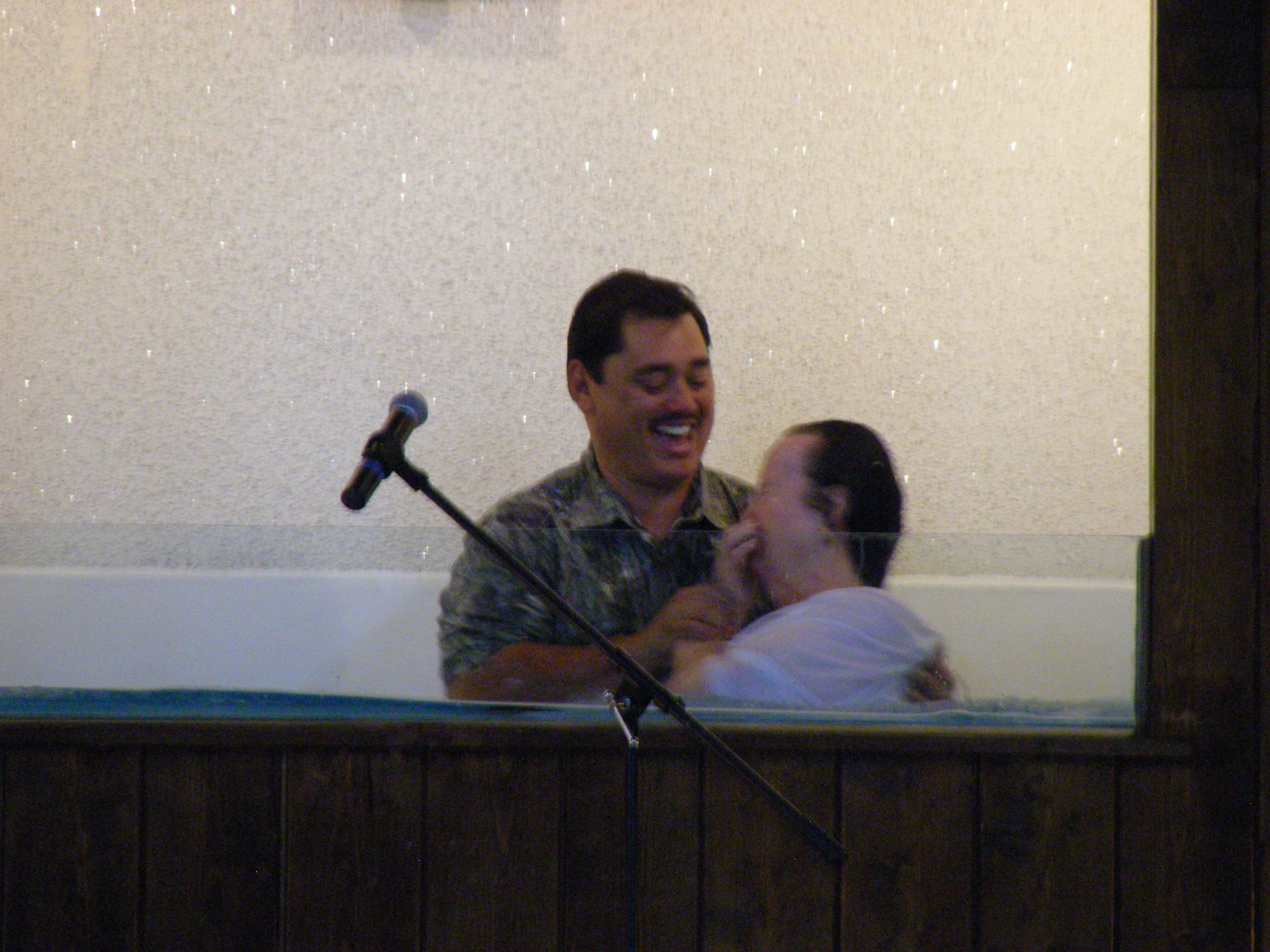
My Mom gets Baptized!!!


This past Sunday, Mother’s day, my Mom gave me the best gift I could ever get. She proclaimed her faith in our Lord Jesus Christ by believers baptism. My Mom asked me to pray before the ceremony and I was honored to do so. As Mom was coming up out of the water, I looked over at Norm and she is jumping up and down and everyone was clapping and cheering. Thanks to all that have prayed all these years for this moment. Thanks to Pastor Dean for making sure all was in order with her and our Lord. This was Pastor Dean’s last baptism as he and his wife Rhonda are heading out to the mission field to serve God. A beautiful day!

What in the world???


Is the Megachurch the New Liberalism?
Albert Mohler

The emergence of the megachurch as a model of metropolitan ministry is one of the defining marks of evangelical Christianity in the United States. Megachurches — huge congregations that attract thousands of worshipers — arrived on the scene in the 1970s and quickly became engines of ministry development and energy.

Over the last 40 years, the megachurch has made its presence known, often dominating the Christian landscape within the nation’s metropolitan regions. The megachurch came into dominance at the same time that massive shopping malls became the landmarks of suburban consumer life. Sociologists can easily trace the rise of megachurches within the context of America’s suburban explosion and the development of the technologies and transportation systems that made both the mall and the megachurch possible.

On the international scene, huge congregations can be found in many African nations and in nations such as Brazil, South Korea, and Australia. In London, where the megachurch can trace its roots back in the 19th century to massive urban congregations such as Charles Spurgeon’s Metropolitan Tabernacle, a few modern megachurches can be found. For the most part, however, the suburban evangelical megachurch is an American phenomenon.

Theologically, most megachurches are conservative in orientation, at least in a general sense. In America, a large number of megachurches are associated with the charismatic movement and denominations such as the Assemblies of God. Many are independent, though often loosely associated with other churches. The largest number of megachurches within one denomination is found within the Southern Baptist Convention, the nation’s largest non-Catholic denomination.

The emergence of the megachurch was noted by sociologists and church researchers attempting to understand the massive shifts that were taking place in the last decades of the 20th century. Researchers such as Dean M. Kelley of the National Council of Churches traced the decline of the liberal denominations that once constituted the old Protestant “mainline.” This decline was contrasted with remarkable growth among more conservative denominations and churches — a pattern traced in Kelley’s 1973 landmark book, Why Conservative Churches Are Growing. Kelley argued that conservative churches were growing precisely because of their strict doctrine and moral teachings. The early megachurches were the leading edge of the growth among conservative churches, especially in metropolitan and suburban settings.

The megachurches were not without their critics. Theologian David Wells leveled a massive critique of the doctrinal minimalism, methodological pragmatism, and managerial culture of many megachurches. Os Guiness accused the megachurch movement of “flirting with modernity” to a degree that put the Christian identity of the massive congregations at risk.

On the other hand, there is evidence that the megachurches have also helped to anchor conservative Christianity within the social cauldron of the United States in recent decades. The evangelistic energies of most megachurches cannot be separated from a deep commitment to conversionist theology and conservative doctrinal affirmations. Within the Southern Baptist Convention, megachurches played an essential role in what became known as the Conservative Resurgence — the movement to return the Convention and its institutions to an affirmation of biblical inerrancy. The most intense years of this controversy (1979-1990) saw the Convention elect an unbroken stream of conservative megachurch pastors as SBC president. In the main, the megachurches provided the platform leadership for the movement, even as the churches themselves became symbols of denominational aspiration.

Sociologically, the megachurch model faces real challenges in the present and even greater challenges in the future. The vast suburban belts that fueled megachurch growth in the last few decades are no longer the population engines they once were. Furthermore, cultural changes, demographic realities, and technological innovations have led to the development of megachurch modifications such as churches with multiple locations and sermons by video transmission. From the beginning, the megachurches led in the embrace of new technologies, and these now include the full array of digital and social media.

What about theology? This question requires a look at the massive shifts in worldview now evident within American culture. Trends foreseen by researchers such as James Davison Hunter of the University of Virginia and others can now be seen in full flower. The larger culture has turned increasingly hostile to exclusivist truth claims such as the belief that faith in Christ is necessary for salvation. One megachurch pastor in Florida recently told me that the megachurches in his area were abandoning concern for biblical gender roles on a wholesale basis. As one pastor told him, you cannot grow a church and teach biblical  complementarianism. Even greater pressure is now exerted by the sexual revolution in general, and, more particularly, the question of homosexuality.

The homosexuality question was preceded by the challenge of divorce. By and large, the story of evangelical Christianity in the United States since the advent of legal no-fault divorce has been near total capitulation. This is certainly true of the megachurches, but it is unfair to single them out in this failure. The reality is that the “Old First Church” and smaller congregational models were fully complicit — and for the same basic reason. Holding to strict biblical teachings on divorce is extremely costly. For the megachurches, the threat was being called judgmental, and the perceived danger of failing to reach the burgeoning numbers of divorced persons inhabiting metropolitan areas. For smaller churches the issue was the same, though usually more intimate. Divorced persons were more likely to have family members and friends within the congregation who were reluctant to confront the issue openly. Church discipline disappeared and personal autonomy reigned triumphant.

Is the same pattern now threatening on the issue of homosexuality? No congregation will escape this question, but the megachurches are, once again, on the leading edge. The challenge is hauntingly similar to that posed by divorce. Some churches are openly considering how they can minister most faithfully, even as the public and private challenge of homosexuality and alternative sexual lifestyles has radically transformed the cultural landscape. Other churches, both large and small, are renegotiating their stance on the issue without drawing attention to the changes.

A shot now reverberating around the evangelical world was fired by Atlanta megachurch pastor Andy Stanley in recent days. Preaching at North Point Community Church, in a sermon series known as “Christian,” Stanley preached a message titled “When Gracie Met Truthy” on April 15, 2012. With reference to John 1:14, Stanley described the challenge of affirming grace and truth in full measure. He spoke of grace and truth as a tension, warning that “if you resolve it, you give up something important.”

The message was insightful and winsome, and Andy Stanley is a master communicator. Early in the message he spoke of homosexuals in attendance, mentioning that some had shared with him that they had come to North Point because they were tired of messages in gay-affirming churches that did nothing but affirm homosexuality.

Then, in the most intense part of his message, Stanley told the congregation an account meant to illustrate his message. He told of a couple with a young daughter who divorced when the wife discovered that the husband was in a sexual relationship with another man. The woman then insisted that her former husband and his gay partner move to another congregation. They did move, but to another North Point location, where they volunteered together as part of a “host team.” The woman later told Andy Stanley that her former husband and his partner were now involved as volunteers in the other congregational location.

The story took a strange turn when Stanley then explained that he had learned that the former husband’s gay partner was still married. Stanley then explained that the partner was actually committing adultery, and that the adultery was incompatible with his service on a host team. Stanley told the two men that they could not serve on the host team so long as the one man was still married. He later told of the former wife’s decision not to live in bitterness, and of her initiative to bring the whole new family structure to a Christmas service. This included the woman, her daughter, her former husband, his gay partner, and his daughter. Stanley celebrated this new “modern family” as an expression of forgiveness.

He concluded by telling of Christ’s death for sinners and told the congregation that Jesus does not condemn them, even if they cannot or do not leave their life of sin.

Declaring the death of Christ as atonement for sin is orthodox Christianity and this declaration is essential to the Gospel of Christ. The problem was that Stanley never mentioned faith or repentance — which are equally essential to the Gospel. There is indeed no condemnation for those who are in Christ Jesus, but this defines those who have acted in repentance toward God and faith in our Lord Jesus Christ (Acts 20:21). As for those who are not in Christ, they stand condemned already (John 3:18).

The most puzzling and shocking part of the message was the illustration and the account of the homosexual couple, however. The inescapable impression left by the account was that the sin of concern was adultery, but not homosexuality. Stanley clearly and repeatedly stressed the sin of adultery, but then left the reality of the homosexual relationship between the two men unaddressed as sin. To the contrary, he seemed to normalize their relationship. They would be allowed to serve on the host team if both were divorced. The moral status of their relationship seemed to be questioned only in terms of adultery, with no moral judgment on their homosexuality.

Was this intended as a salvo of sorts? The story was so well told and the message so well constructed that there can be little doubt of its meaning. Does this signal the normalization of homosexuality at North Point Community Church? This hardly seems possible, but it appeared to be the implication of the message. Given the volatility of this issue, ambiguity will be replaced by clarity one way or the other, and likely sooner than later.

We can only hope that Andy Stanley and the church will clarify and affirm the biblical declaration of the sinfulness of homosexual behavior, even as he preaches the forgiveness of sin in any form through the death and resurrection of Jesus Christ. His affirmation of grace and truth in full measure is exactly right, but grace and truth are not actually in tension. The only tension is our finite ability to act in full faithfulness. The knowledge of our sin is, in truth, a gift of grace. And grace is only grace because of the truth of what God has done for us in Christ.

And yet, even as we know this is true, we also know that the Christian church has often failed miserably in demonstrating grace to those who struggle with same-sex attractions and those who are involved in homosexual behaviors. We have treated them as a special class of sinners and we have assured ourselves of our moral superiority. The Gospel of Jesus Christ destroys that pretension and calls for us to reach out to all sinners with the message of the Gospel, declaring the forgiveness of sins in Christ and calling them to faith and repentance.

The Gospel is robbed of its power if any sinner or any sin is declared outside its saving power. But the Gospel is also robbed of its power if sin — any sin — is minimized to any degree.

What does Andy Stanley now believe about homosexuality and the church’s witness? We must pray that he will clarify the issues so graphically raised in his message, and that he will do so in a way the unambiguously affirms the Bible’s clear teachings — and that he will do so precisely because he loves sinners enough to tell them the truth — all the truth — about both our sin and God’s provision in Christ. Biblical faithfulness simply does not allow for the normalization of homosexuality. We desperately want all persons to feel welcome to hear the Gospel and, responding in faith and repentance, to join with us in mutual obedience to Christ. But we cannot allow anyone, ourselves included, to come to Christ — or to church — on our own terms.

The current cultural context creates barriers to the Gospel even as it offers temptations. One of those temptations is to use the argument that our message has to change in order to reach people. This was the impetus of theological liberalism’s origin. Liberals such as Harry Emerson Fosdick claimed that the Christian message would have to change or the church would lose all intellectual credibility in the modern world. Fosdick ended up denying the Gospel and transforming the message of the Cross into psychology. Norman Vincent Peale came along and made this transformation even more appealing to a mass audience. Fosdick and Peale have no shortage of modern heirs.

Theological liberalism did not set out to destroy Christianity, but to save it from itself. Is the same temptation now evident? The Great Commission, we must remind ourselves, is not a command merely to reach people, but to make disciples. And disciples are only made when the church teaches all that Christ has commanded, as the Great Commission makes clear.

The megachurches are once again on the leading edge of these questions, but they are not alone. The urgency to reach people with the Gospel can, if the church is not faithful and watchful, tempt us to subvert the Gospel by redefining its terms. We are not honest if we do not admit that the current cultural context raises the cost of declaring the Gospel on its own terms.

Given their size and influence, the megachurches have an outsize responsibility. I am a member and a teaching pastor in a megachurch, and I am thankful for its faithfulness. I know a host of faithful megachurch pastors who are prepared to pay whatever cost may come for the sake of the Gospel. I know that my own denomination was regained for biblical fidelity under the leadership of brave megachurch pastors who used their pulpits to defend the truth. We desperately need these churches as both theological anchors and missiological laboratories.

The times now demand our most careful and biblical thinking, and they demand our clearest conviction matched to a missiological drive to reach the world with the Gospel. We must embrace the truth with the humility of a sinner saved only by grace, but we must embrace it fully.

Once again, the megachurches are on the leading edge. We must pray that they will lead into faithfulness, and not into a new liberalism.

Andy Stanley’s message series, “Christian,” can be viewed on the church’s website —http://www.northpoint.org/messages/christian.

I am always glad to hear from readers. Write me at mail@albertmohler.com. Follow regular updates on Twitter at www.twitter.com/AlbertMohler.

Publication date: May 1, 2012


We have recently been blessed with some new neighbors. Norm has really enjoyed them, me, not so much. When these guys congregate in one place for any length of time, something foul happens. And it hangs around for a long time after they, the neighbors have moved on in search of food. This area is not far from our outdoor gym!

Seven Lessons from Ruth…


Seven Lessons from the Book of Ruth. In Ruth and Boaz we see an outline of our own spiritual history and our relationship with the Lord Jesus Christ.    1. The cost of unbelief and disobedience. Chapter 1, vs. 1-21.     A. It is always less costly to obey God.     B. All disobedience is manifest unbelief.  C. Bad decisions made early in life will have bad consequences in years to come.  D. Our example is more important than our words.  E. Do not, for any reason, move your family anywhere you would  not want to die and leave them. 2. God’s sovereign, unconditional Election.     Another meaning for the name of Ruth could be “satisfied stranger.” Ruth was a stranger by nature, but she found satisfaction in the Lord by grace. We need to always rejoice in, give thanks to, our God for His free, electing love in Christ. Ps. 65:4, John 15:16, 2 Thess. 2:13. 3. The Mystery of God’s providence.     Providence is the unfolding and accomplishment of God’s everlasting purpose, which is the salvation of His elect. Romans 8: 28-30, Ps. 76:10. We are ruled, totally, in God’s sovereign providence and according to His eternal purpose of grace. 4. The Blessedness of Redemption by Christ. Boaz, a beautiful picture of Christ, our Kinsman-Redeemer. A. Christ assumed our nature: “The Word became flesh.”    B. He was a mighty redeemer. His name is “The Mighty God.” C. Boaz was a wealthy redeemer. Christ willingly laid down His life for us. D. He was a lawful redeemer, such a redeemer as the law required. So, too, is our Lord Jesus Christ. E. Boaz was an effectual redeemer. He purchased Ruth, the object of his love, for his own. The Son of God, our effectual Redeemer, will have as His own the people of His choice. F. Boaz was a complete redeemer. When Ruth married Boaz, she received him and everything in him. God’s Word states, “You are complete in Him.” Col. 2:10. 5. The instrumentality of God’s Word in conversion. Read chapter 1 verse 6. God has ordained the salvation of His people and He has ordained the means by which He will save them. When the appointed time of love comes, when God is pleased to call the sinner He has chosen to life and faith in Christ, He will do so by sending someone to the chosen sinner with the gospel of His grace.  The scriptures declare that God saves sinners only by the instrumentality of the Gospel. ‘It pleased God through the foolishness of the message preached to save those who believe.’ 1 Cor. 1:121, Rom. 10:17, Eph. 1:13, Heb. 4:12, James 1:18, 1 Peter 1: 23-25. 6. The character of true faith. The book of Ruth shows this- True faith is commitment to Christ. Read chapter 1: 16-18. Commitment was the difference between these two girls. Chap. 2 verse 10, shows true faith acknowledges personal unworthiness. Chap. 3: 4-8 shows true faith humbly takes it place at the feet of Christ. Mary was found here, the leper was found here, John was found here. This is where we should be, at His feet. At His feet is the place of humility, reverence, faith, worship, rest, love and honor. We serve Christ best when we serve at His feet, leaning upon His Word, trusting His grace, and seeking His glory. 7. The reward of Faith. Chapter 2:12 Faith is taking shelter under the wings of the Almighty, fleeing to Christ our refuge. Faith, above all else, honours God.                                                                                                                      References: Ruth and Esther, Women of Faith. Thru the Bible commentary series, Book of Ruth. J. Vernon McGee. Halley’s Bible Handbook, Henry H. Halley. Discovering Christ in Ruth, the Kinsman Redeemer, Donald S. Fortner. Matthew Henry Commentary on the whole Bible, Bible study tools.com Wesley’s explanatory notes, Bible study tools.com. The Scofield Reference Bible.

Study of the Book of Ruth 8….


Vs. 7, cont. Some church members don’t have shoes. They have their heart free of sin, they are sure of their salvation, they rightly use the Word of God. But they are shoeless- they are not prepared to share the Gospel. Those who do not advance the Kingdom of God are stationary soldiers; any evangelistic movement is too painful for them. If they are seeking to save the lost, they are taking ground for God’s Kingdom. Vs. 8-10. First the property and then Ruth. Property/persons. There were some far reaching consequences from this transaction! Two poor widows are renewed- one becomes a bride- one goes from bitterness to pleasant again. Boaz is transformed from single to great blessing and joy. It made David and ultimately Christ. Vs. 11. The people of Bethlehem are celebrating, rejoicing because Ruth had won their hearts, she had not chased men, and as an outsider or foreigner she had come to trust God as her Savior. Vs. 12-14. Versus 11-12 is a prayer by the elders of the city.  The transaction was concluded by prayer. Business and marriage. Just as business is not solely a secular affair divorced from God, neither is marriage separated from the life of God. “Marriages are made in heaven, and if not, they become an earthly hell.” Verse 13 is their happy ending. Rev. 19:7 is our happy ending. Vs. 15-16. You can see how precious Naomi’s grandson is to her. Vs. 17. Obed means “servant” or “worshiper.” Not a blood relation to Naomi, but legally her grandson. Naomi’s estate will go to Obed.  Vs. 18-22. The book of Ruth concludes with Obed’s genealogy. Arguably, these verses are as important as any portion of the Old Testament. This little book connects the family of David with the tribe of Judah. Jesus Christ, our Kinsman-Redeemer. What are the requirements for a Kinsman-Redeemer? 1. He must be a near kinsman. 2. He must be willing to redeem. 3. He must be able to redeem. 4. He must be free himself. 5. He has to have the price to redeem.  These are the five facts that qualify the Kinsman-Redeemer under God’s Law. Christ in His humanity fulfilled the first two requirements, Christ, in His deity fulfilled the next two, Christ as the God-Man, met the final requirement.

Book of Ruth 7…


Chapter 4- Ruth, a stranger came all the way from the land of Moab and walked straight into the heart of Boaz. We have come from a strange place to the heart of Christ and we have a love story like Ruth and Boaz have. Everything in this chapter is designed by God the Holy Spirit to direct our hearts and minds to the Lord Jesus Christ and His great work of redemption.  Vs. 1 “Boaz went up to the gate.” What did the gate serve in those days? The courthouse. Boaz went to the gate for two reasons, #1. This is where the court was held, and he is going to take his other kinsman to court. #2. Boaz knew that his kinsman would pass through this gate sooner or later, so he sat down and waited. Who was this other man? Relations in those days were not spoken of like we do today. He could have been the brother of Elimelech, but what it really came to, either you were kin or not. Boaz sat at the gate to intercede for Ruth, just like Christ sits at the right hand of the Father and intercedes for all believers. For Boaz, failure was not an option, just like Christ. Like our Saviour, “He will, not might, or could or maybe, but WILL save His people from their sins.” (Matt.1:21). Vs. 2.  Is Boaz ready for action and ready to leave nothing to chance? Ten elders or ten witnesses could represent the Ten Commandants. The court is in session and Boaz is more than ready to state his case. Vs. 3. “Naomi has a parcel of land to sell, namely, the equity of the redemption of it out of the hands of the mortgagee, which she is willing to part with;’’ and, wanting money, for a small matter she would sell her interest to the heir at law, who was fittest to be the purchaser. The law states property before persons when it comes to redemption.             Vs. 4. Boaz gives this man the priority that belongs to him and the question is- does this man want to be the redeemer? Notice how he responds: “I will redeem it.” Apparently he is a generous man. In those days, there was a certain disgrace or criticism to refuse to redeem property. What do you suppose Boaz felt when this man said yes?  His heart probably sank to his sandals- it would have taken the wind from his sails. But, as any man who has ever been in love and is trying to obtain a bride- he has a plan B. Vs. 5. Boaz said, “Just one more thing, there is a woman, a Moabitess, she was married to a son of Elimech, she is the one to inherit the land. So redeem the property and you also get to redeem this woman- marry her, she is tied to the property.” Notice that Boaz makes it very plain what Ruth’s nationality is. Why would he do this? Read Deut. 23:3. Bringing Ruth into the congregation would jeopardize this man’s own property. This is something Boaz would have no problem with. His love for Ruth means he would do whatever it would take to be with her. All the other man heard was “Moabitess.” Vs. 6. The answer goes from “I will” to “I cannot.” This is a very interesting verse that shows a great picture of contrast for us. We have Boaz and we have the other kinsman, if Boaz represents Christ, then who does the other kinsman represent?  The Law. The Law could never redeem us. Read Rom. 3:20. The Law was given to reveal man’s true condition.  God’s standard is the Law and we all fall well short of it. We need a Kinsman-Redeemer who loves us and who was not only willing to risk everything, but gave His life. Vs. 7. The removal of the shoe and the placing of it in the hands of the first party was a legal document of great importance in that day. Remember the law in Deuteronomy said when the redeemer refused to marry the widow of the deceased, she was to take the shoe off his foot and spit in his face. That man from then on out would be called “ the house of him that hath his shoe loosed.” Boaz did not spit in the man’s face, but did with draw the shoe. Ruth was supposed to do all this, but Boaz acted on her behalf. Why do you think he did this? Two reasons, 1. she was a Gentile, and 2, she was too modest to push the matter publicly. Does the Bible have anything to say about shoes? Eph. 6:15. Don’t go barefoot! Only the Gospel can clothe us.

Study of Ruth part 6….


Vs. 9. This is one of those tender moments from a movie that both guys

and gals can enjoy. A great verse of love in the Word of God. Ruth is
saying, “I want you as my kinsman-redeemer, and I want to tell you so.” If
you are a guy you can see and feel the change in Boaz in verse 10.
 
Vs. 10. Boaz speaks to Ruth, “When you came here, it was obvious you
were not husband-hunting.” Look at Deut. 25: 5, 7-10. Ruth, under the
guidance of Naomi, did none of this. In a quiet and respectable way she
revealed her intentions to Boaz. He will now spring into action as would
any man that is in love would do. Have you thanked God lately for the love
story He has given us? For our near Kinsman-Redeemer who loved us,
and gave Himself in order to redeem us.
 
Vs. 11. We talked earlier about the talk of the town, gossip, good gossip
about Ruth’s good reputation. Probably, most town people thought she
would be a no good scoundrel because she was from Moab. “Exemplary
virtue ought to have its due praise (Phil. 4:8 ), and it will recommend both
men and women to the esteem of the wisest and best. Ruth was a poor
woman, and poverty often obscures the lustre of virtue; yet Ruth’s virtues,
even in a mean condition, were generally taken notice of and could not be
hid; nay, her virtues took away the reproach of her poverty. If poor people
be but good people, they shall have honour from God and man. Ruth had
been remarkable for her humility, which paved the way to this honour. The
less she proclaimed her own goodness the more did her neighbours take
notice of it.” Matthew Henry.
 
Vs. 12. Is this a man in love or what? How did he know about this other
man? Like any man that is, or has been in love, he has been investigating,
planning, thinking, and I would guess scheming. This other near kinsman
has Boaz’s hands tied. This other man was probably a brother of
Elimelech’s and an uncle of Ruth’s first husband. Naomi probably did not
know about this man, otherwise she would not have instructed Ruth to
pursue Boaz.
 

Study of Ruth part 5….


Chap. 3 vs. 2. Here is what Naomi is telling Ruth, “This man Boaz is your kinsman-redeemer. You have a right to claim him. In fact, Ruth, you must claim him as your kinsman-redeemer. I want you to go up to the threshing floor tonight and let him know.” Vs. 3. This is a great verse to study. Naomi tells Ruth to do these four things and in these four things are the picture if the sinner who comes to Christ. 1. Wash thyself. Read Titus 3:5. We need a bath, a washing of regeneration, ‘Ye must be born again.’ John Wesley was asked why he always preached on ‘ye must be born again.’ “Well”, he said, “I’ll tell you. The reason that I preach on ‘ye must be born again’ is because ye must be born again.” Naomi tells Ruth to wash up. 2. “Anoint thee.” We need and have an anointing of the Holy Spirit. 1 John 2:20- “But ye have an unction (anointing) from the Holy One, and ye know all things.” 3. “Put thy raiment upon thee.” In Romans 3:22 Paul speaks of it as a garment that comes down over the sinner, covering him, so that God sees us in Christ, and His righteousness becomes our righteousness. 4. Naomi tells Ruth to get down to the threshing floor. The sinner needs to get to the threshing floor to claim our Kinsman-redeemer! Vs. 4-6. Ruth is instructed to go to where Boaz has retired and to take her place at his feet. Then she is to pull his long mantle, the Chudda, over her that he might know that she sought shelter and protection. This was a quiet way to let Boaz know that she would be willing to accept him as her kinsman-redeemer. Remember this was all the under the direction Naomi. Any critics of this method, and there are some, which there is nothing funny or immoral going on here need to keep in mind the originator, Naomi. She would not have instructed Ruth to do something that would violate God’s law. The threshing floor was a public place. Families of the harvesters were there. There would be praises to God, a dinner, and some sort of worship service. Vs. 7-8. Boaz gets cold, the cloak has been pulled off of him. He sits up reaches down and finds a woman.

Study of Ruth, part 4…


Vs. 17. Boaz made it possible for Ruth to glean, but she was diligent in her work. This is something all Christians should have. “Not slothful in business; fervent in spirit; serving the Lord. (Rom. 12:11). Ruth was a women of faith, but also was found faithful in every task. “True faith produces faithfulness.” “Faith without works is dead” (James 2:20). If she had not labored through the day she would not have filled her basket (1 bushel and 3 pints).  After gleaning, she had to beat out that which she gleaned. Sounds like a hard days work! There are two things we can learn from this passage about a harvest, 1.praying, 2. go into the fields and glean. Matt. 9: 37-38. Here are two bonus things to remember, 1. ‘A living faith is a going faith.’ 2. ‘Many a little makes a great deal.’ Vs. 18-19. Naomi says, “My, I’ve never seen anything quite like this! Where have you been today? Somebody has shown undue consideration for you.” Ruth tells the story of her day without realizing how important the man, Boaz is.  But, Naomi knows. Vs. 20. Lets look at this, another law that will be strange to us. Lev. 25: 25-28 explains God’s law about redemption of property. Lev. 25:47-48 is the law of God showing the redemption of people that have sold themselves into bondage. The goel, or Kinsman-Redeemer is a beautiful type of Christ. The kinsman redemption was of persons, and an inheritance. The Redeemer must be a kinsman. The Redeemer must be able to redeem. Redemption must pay the just demand in full. Exodus is the book of redemption, and teaches: 1. redemption is wholly of God. 2. Redemption is through a person. 3. Redemption is by blood. 4. Redemption is by power. The blood of Christ redeems the believer from the guilt and the penalty of sin. The power of the Holy Spirit delivers from the dominion of sin. The word ‘redeem’ means ‘to buy back’, or ‘buy back’, and ‘to take possession of.’ The one who redeems evicts and dispossess all those who have held his purchased during the time of its bondage. He takes personal possession of that which has been bought back. Here are 7 characteristics of our Kinsman-Redeemer, the One who has the right to redeem. 1. It is a divine appointment. Only one who is appointed by God has the right to redeem. (John10:16-18). 2. The redeemer must be near to kin of the one he redeems. (Heb. 2: 10-13). 3. The kinsman-redeemer himself be entirely free of debt. (Heb. 7:26). The one that redeems must fulfil the Law of God. He must fill in all the blanks. 5. The redeemer must be willing to redeem. No one can be forced to redeem. Because of love, the Lord Jesus Christ became our redeemer. (Ex. 50:5-7). 6. The redemption is specific and special, nothing general. The Kinsman-redeemer restored what he had not taken away. (Ps. 69:4).Our Redeemer, Jesus Christ, His work cannot be counted. (Rev. 7:9). 7. The One who has the right to redeem must raise up a seed. Our Kinsman-redeemer will raise up a seed. There are some people in this world who, having been chosen by God in eternal election and redeemed by special redemption, must and shall be saved by God’s omnipotent grace. (Isa. 53: 10-12. Ps. 22:30-31) Vs. 21-23. This is about six weeks. A six-week courtship of a very special couple. At the end, Boaz, the rich kinsman, and Ruth, the stranger, were in love. Remember this all occurred during the time of the Judges, which was written that Gideon had many wives and Samson had notorious affairs with women. In times of great sin and ungodly behavior, some still cling to faith and uphold the Law’s of God. The honest love of a man and of a woman is born in the heart of God! In the Song of Solomon it reads…for love is strong as death….Many waters cannot quench love, neither can floods drown it. Chapter 3 takes place on the threshing floor of Boaz. It’s obvious that Ruth was not claiming what she had a right to, so Naomi takes matters on. She becomes the matchmaker. Vs. 1. For six weeks now Naomi has been watching Boaz and Ruth return from the harvest work and she has seen what is happening, they are falling in love. The harvest is complete, but Ruth is very modest and is not making any claim on Boaz. So Naomi asks, “shall I seek rest for thee.” ‘Rest’ of course is marriage, things are not moving quickly enough for her .

Sunday School…Book of Ruth…part 3….


Chap. 2. 1. We are now introduced to the hero of our story, Boaz. The name Boaz means “strength.” Boaz is immediately identified as a kinsman (which is important to note) of Naomi’s husband.  A mighty man of Law can also be translated a mighty man of war. He was a mighty man of wealth, law and war. At this point we have to mention that Boaz is a picture of and a type of the Lord Jesus Christ. You and I have a Kinsman also, one who is made like we are, yet sinless. (Heb. 7:26). Vs.2. This is a strange law here because we have nothing like it in our legal system. Let’s read Lev19:9-10. God told His people that they had to take care of the poor. This was His way of doing just that. It is restated again in Lev. 23:22 and again in Deut. 24:19. Ruth acts upon this law. Vs.3. Ruth had no idea where to go, into the field that belonged to Boaz. It was of great importance that she would find the correct field! “Hap” is an old word meaning “perhaps or happens, or happenstance.” Divine providence, God’s Will brought Ruth to the place where she would meet Boaz. Proverbs 3:5-6. Vs.4-5. Boaz sounds like a great guy to work for. He greets his workers and they respond in like manner. Verse 5 starts the really exciting part of the story! Ruth has caught the attention of Boaz. “Whose damsel is this” could be translated as love at first site. This is romance in the fields of Boaz. Vs.6-7. It sounds like his foreman is half way apologizing and assuring Boaz he had nothing to do with her coming into the field. The foreman could not turn down her request, even if she was from Moab. Notice how Boaz reacts in the next verse. Vs.8. Is he interested or not? “ I want you to glean in my field.” says Boaz. Two very important things in verse 9, he invites her to stay in his field and he puts his cloak of protection around her. A widow from Moab would be subject to all sorts of hazards and Boaz knew this. He moved to protect her.  His words to Ruth  indicate what our God requires, expects and deserves from all of His children.  Boaz’s house was something separate and distinct from all the other houses of the land.  And he was determined to keep it that way.  What does God require of us, see 2 Cor. 6:14-18.         Vs.10. After listening to Naomi about how bad things would be for her in Bethelem, she cannot believe how Boaz has treated her. She is startled! Like Ruth, we have to ask why I have found grace in the eyes of God? The grace of God is seen exhibited here in the grace that was manifested to this woman. “While we were yet sinners, Christ died for us.” Vs. 11 Boaz was probably out of town when Naomi and Ruth arrived in Bethlehem probably fighting or closing a deal. He was a mighty man of law, war and wealth. But when he returned the town was buzzing about a widow that had accompanied Naomi home. Gossip, just like we do today, but gossip about how good she was. Someone from Moab could be this good to her mother-in-law. Boaz hears all these good things about Ruth, but also see’s her great beauty.  He is really blown away! Vs. 12 It was known that Ruth had made a decision in favor of the “Lord God of Israel, under whose wings thou art come to trust” . Remember that Ruth represents us, sinners saved by grace, God’s elect. All of us that are redeemed , converted by the power and grace of God. Ruth had come to trust God. Naomi taught both Ruth and Orpah the things of God. No doubt, Orpah believed Naomi’s words and was prepared to go with her to Bethlehem, until she realized what it would cost her. When she realized that, she went back to Moab. She believed Naomi, but not the Lord. But Ruth had come to trust the Lord God of Israel.  Wonder what kind of witness Naomi had? Vs. 13 Ruth is surprised, she had not expected any kindness and fully thought she would be treated as an outsider. She calls attention to the fact that  she is not like the handmaidens. This is probably what attracted Boaz to her.  There is a reason that he had not married yet. Ruth was different, this drew Boaz to her. Vs. 14 Boaz is in love! He meets her at ten and invites her to lunch.  Here are some things for us to ponder over, 1. The minute detail of divine providence in accomplishing the purpose of God is evident. (Eph. 1:11). 2. Once Ruth was in Bethlehem she went out into the fields to work. All who are brought into the family and kingdom of God are born to serve. (Eph. 2:8-10, Titus 2:11-15). 3. The calling of Ruth the Moabitess prefigured the calling of the Gentiles. (Eph 2:11-13, 19). 4. The love of Boaz for Ruth was a picture of the love of Christ for us. (Eph. 3:18-19; 5:25-27). 5. As Boaz’s love to her was a matter of unceasing wonder  to Ruth (‘Why have I found favour in your eyes’), so Christ’s love to us, His great grace to us, is an unceasing, wondrous mystery to the believing heart. (Eph. 3: 8-11, 19-21). Vs. 15-16. Boaz wants his workers to show Ruth every courtesy and consideration. He allows her to go where no other gleaner would be allowed. Boaz further tells his men, ‘When you see Ruth is behind you and nobody is looking , you just drop a sheaf back there and keep going and when she tells you about it you just say you have to keep going.’

Sunday School…Book of Ruth…part 2…


Vs. 10. Their first decision is to go with Naomi. Vs.11. This was strange, but the Mosaic Law said that when a man died, the nearest of kin was to marry his wife, and if there were a brother he was the one to marry her. Naomi lays it out for her girls, if you go, you will never marry, you two are outcasts. Vs. 12. In other words, she is saying if I had son’s, you two would be cradle robbers. Vs. 13. God had judged Naomi’s family and she told them that she would have to bear that, but the daughters did not have to, unless they continued with her. Vs. 14. Scene 2, get out the Kleenex. These three ladies start crying again. Orpah kissed Naomi, but Ruth clung to her. This is very profound. Great issues are often determined by choices that appear to be insignificant.  This decision fixed forever the course of human history in the direction of God’s eternal, redemptive purpose! Vs. 15. As Orpah makes her decision, we see that she never really did follow God with a heart given to Him. She goes back to her idols, never to be heard from again. Ruth made her decision and she made it for time and eternity. Ruth has her name in the very first chapter of the N.T. She is in the genealogy that leads to Christ! Naomi tests Ruth to see if she is genuine or not. Vs. 16. This is a beautiful passage. This is the kind of repentance that means something. Vs.17. Ruth tells Naomi, 1. I made a decision to go with you, and I’m going. 2. She is not only going with Naomi, she will identify herself with Naomi. 3. I am forsaking my people, my idols and I am going to identify myself with your people, God’s people. 4. The real reason she married one of those unhealthy boys, she had heard of the true and living God that came from the house of bread and praise over in the promised land. In Ruth we see genuine and real repentance. Ruth shed tears of “turning in another direction” (metanoia, Greek for repentance). Orpah shed just as many tears as Ruth, but hers were not tears of real repentance. A lot of people today shed tears, but if there is no change in direction, a course correction, it will all be for nought. They will be like Orpah. Vs. 18. Naomi knew that Ruth had made her decision. Vs. 19. Naomi returns as a widow with a little foreign girl. Very much different from when they left. Vs. 20-21a. Naomi says call me, Mara, which means bitter or sorrowful. Someone once said, “Life in this world ain’t much. It begins with a slap on the bottom and ends with a shovel full of dirt in the face, and there ain’t much in between except bumps and bruises.”      Vs. 22. God leads Naomi and Ruth back home at just the right time, the time of harvest.

Sunday School, the Book of Ruth…part 1…


Vs. 1,  This verse starts to tell us one of the saddest family stories contained in the Bible. “Now it came to pass” means because God brought it to pass. Rom. 11:36. “When the Judges ruled” The book of Judges tells a sorry and sordid story of a departure from God. The people served the living and true God, then turned from Him to idols and immoral lifestyles, then crushed by enemies, cried to God and He raised up judges to deliver them. “A famine in the land” In the land of Canaan, a land that had flowed with milk and honey, a land where a cluster of grapes took two men and a pole to carry(Num. 13:23). Even in Bethlehem, which means house of bread and Judah which means praise, there was famine. This was one of the judgements which God had threatened to bring upon Israel if they sinned against Him(Lev. 26:19-20). “And a certain man of Beth-lehem-judah went to sojourn in the country of Moab, he, and his wife, and his two sons” Moab is described in Psalm 108:9 as being God’s washpot, or it could be said that Moab was God’s garbage can. This man takes his family from the house of bread and praise to the dump. In the midst of God’s providential judgements our only course of action is obedience and faith, not what the world would do or what we think. Listen to Eccles. 7:14, “In the day of prosperity be joyful, But in the day of adversity consider: Surely God has appointed the one as well as the other.” “The day of adversity will either draw us close to our God or drive us to the world. If faith does not cling to Christ, the flesh will drag us from Him.” Vs. 2 Elimelech means ‘my God is king’ or ‘the King is my God’ a great name tha he did not live up to. The name Naomi means ‘pleasant’ She lived up to her name. Their two sons named Mahlon, which means ‘unhealthy’ and Chilion, which means ‘puny.’ “And they came into the country of Moab, and continued there.” Not just going to Moab, but making their home there, in the dump. Vs. 3. The husband, my God is King, dies in the dump. When we get away from God, that is when trouble comes. Vs. 4. What happened here? They broke the law, the Mosaic law( Deut.7:2-3, 2Cor. 6:14). Those believers who choose to marry a man or woman who has no regard for God marry a life of trouble( Duet, 7:3, 23:3, Ezra 9:1-2, Neh. 13:23-27, 2 Cor 6:14). Out of fellowship, away from God in a far country, the next step is apostasy. Orpah means “deer or “fawn.” It means she was an athletic type and why she married one of these sickly boys is a good question. Ruth, has probably ten different meanings for her name, beauty is one and personality is another. Trouble has come and will continue to take this family to task. Vs. 5. Unhealthy and puny died. Naomi has lost her family and all she has left is two little foreign daughters-in-laws. We can learn 3 things from “my God is King” 1. We cannot outrun death. At the appointed time, we shall die. 2. We must never expect to prosper by disobedience. 3. All earthly pleasure and comforts are temporary. Vs.6. When Naomi heard what God had done for His people, she believed the message and arose to return to Bethlehem. Vs.7. There can never be a reconciliation with God without a separation from the world. In the coming verses Naomi is going to talk to her daughter-in-laws like a Dutch uncle. She is going to tell them that things are going to be rough for them in her home country. The Israelites just did not have anything to do with the Moabites, just like the Samaritans in the N.T. Vs. 8. Naomi tells these girls they have been good to her and her boys. They were good wives. She encourages them to return to Moab, if not, the cost to them will be high.

Much at Stake….John MacArthur


“If You are the Son of God, command that these stones become bread.” – Matthew 4:3

Before Satan tempted Jesus more directly, he threw out a cynical challenge to test Christ’s deity. The devil’s conditional statement, “If You are the Son of God,” assumed that Jesus was indeed God’s beloved Son (3:17). But he hoped to persuade Him into a demonstration of divine power that would violate God’s plan, which called for Jesus to set aside His divine power while on earth and use it only when the Father commanded. If Satan could make Jesus presume upon His divine rights and act independently of His Father, this would amount to disobedience.

Obviously, then, the purpose of the first temptation went far beyond getting Jesus to satisfy His physical hunger by wrongly using miraculous power. The devil wanted Him to doubt the Father’s word, love, and provision—to disobediently declare that being hungry was simply not fit for God’s only Son.

Satan’s argument was, “Hadn’t He endured enough humiliating circumstances already (the stable, the flight to Egypt, obscurity in Nazareth, this time in the wilderness) in an effort to identify with unworthy humanity?” But unlike Eve in the Garden of Eden (cf. Gen. 3:1f.), Jesus stayed true to God’s will and did not cast doubt on the Father’s word or His already secured position as God’s Son.


Ask Yourself

Yes, there is more at stake in temptation than the mere subject of the enticement. There are significant matters of trust and freedom and identity involved. How seriously are you taking these threats to your Christian calling? Pray that God would help you see the battle for what it is.

An open letter to the President of the United States from Dr. Michael Youssef.


Dear Mr. Obama,


From the time you declared your candidacy for president of the United States and announced under your breath that you are a Christian, many true, Bible-believing Christians immediately had doubts about your muffled profession of faith. After all, for 20 years you drank deeply from the well of Rev. Jeremiah Wright — who, in spite of the clerical garb he wears, preaches a Universalist gospel. It is not the true gospel that Jesus proclaimed, which clearly states that He and He alone is the only way to heaven and the Father. That claim was for all people of the earth.


The Bible is not ambiguous, Mr. President, as you and some of your Universalist friends believe. Jesus made it clear in John 14:6 that He alone is “the way, the truth, and the life.” Furthermore, the Bible testifies in Acts 4:12 that “there is no other name under heaven given to men by which we must be saved” except the name of Jesus.

 

That, Mr. Obama, is true Christianity.


Be that as it may, millions of Bible-believing Christians gave you the benefit of the doubt and decided to wait and see. After all, in the words of our Lord Jesus Christ Himself, “By their fruit you will recognize them” (Matt. 7:20). Many in the Evangelical community deliberately refused to judge you by your questionable associates and friends; they wanted to see for themselves.

 

And sadly, Mr. President, you deeply disappointed them.


Not only did you use endearing, even fawning, statements and declarations regarding Islam and Muslims, but you deliberately treated the National Day of Prayer underhandedly. While publicly recognizing every Muslim holy day in the past year, you failed to issue an Easter proclamation in 2011. You chose not to mention the resurrection of the Lord Jesus Christ, which is, after all, the foundational bedrock of your Christian faith and the very reason why our nation celebrates Easter.


The limits of time and space do not afford me the luxury of enumerating your many anti-biblical and anti-Christian executive orders and policies. But I must speak to the bombshell of December 6, 2011.


You see. Mr. President, there are persecuted Christians in your home country of Indonesia, as well as in Nigeria. And thanks to your indecisive and failed policies, we have added Egypt to the list. These beleaguered Christians have always looked to the United States for encouragement and affirmation. But when they look to you, they find none.


Imagine, Mr. Obama, their dismay that you have not publically threatened to tie foreign aid — which is the taxpayers’ money, not the government’s — to stopping the church burnings and the severe persecution and killings of Christians in Egypt. Yet on December 6, your administration did decide to publically threaten to tie American taxpayer money in the form of foreign aid to the support of gay and lesbian rights. (See related article)


You surely know, Mr. Obama, that as Christians, while we see homosexuality as the Bible sees it … a sin, we never hate nor advocate the killing of homosexuals. That is something left to your dear “friends” in the Muslim world; something they do to both homosexuals and Christians on a regular basis.


The White House declared that this announcement “marked the first U.S. government strategy to combat human rights abuses against gays and lesbians abroad.” This was no great comfort to desperate and persecuted Christians worldwide.


One final question, Mr. President.


If you are a true Christian, as you claim under your breath, why do you not feel that same passion and commitment toward your brothers and sisters in Christ, who are paying for their faith with their lives?


May the Lord’s hand guide you to all truth.


This is my regular prayer for you.


this is why we say “MERRY CHRISTMAS!”


Who has believed what he has heard from us?
And to whom has the arm of the LORD been revealed?
For he grew up before him like a young plant,
and like a root out of dry ground;
he had no form or majesty that we should look at him,
and no beauty that we should desire him.
He was despised and rejected by men;
a man of sorrows, and acquainted with grief;
and as one from whom men hide their faces
he was despised, and we esteemed him not.
Surely he has borne our griefs
and carried our sorrows;
yet we esteemed him stricken,
smitten by God, and afflicted.
But he was pierced for our transgressions;
he was crushed for our iniquities;
upon him was the chastisement that brought us peace,
and with his wounds we are healed.
All we like sheep have gone astray;
we have turned—every one—to his own way;
and the LORD has laid on him
the iniquity of us all.
He was oppressed, and he was afflicted,
yet he opened not his mouth;
like a lamb that is led to the slaughter,
and like a sheep that before its shearers is silent,
so he opened not his mouth.
By oppression and judgment he was taken away;
and as for his generation, who considered
that he was cut off out of the land of the living,
stricken for the transgression of my people?
And they made his grave with the wicked
and with a rich man in his death,
although he had done no violence,
and there was no deceit in his mouth.
Yet it was the will of the LORD to crush him;
he has put him to grief;
when his soul makes an offering for guilt,
he shall see his offspring; he shall prolong his days;
the will of the LORD shall prosper in his hand.
Out of the anguish of his soul he shall see and be satisfied;
by his knowledge shall the righteous one, my servant,
make many to be accounted righteous,
and he shall bear their iniquities.
Therefore I will divide him a portion with the many,
and he shall divide the spoil with the strong,
because he poured out his soul to death
and was numbered with the transgressors;
yet he bore the sin of many,
and makes intercession for the transgressors.
“Sing, O barren one, who did not bear;
break forth into singing and cry aloud,
you who have not been in labor!
For the children of the desolate one will be more
than the children of her who is married,” says the LORD.
Isaiah 53